
Leave A Message
If you are interested in our products and want to know more details,please leave a message here,we will reply you as soon as we can.
Fine Flake KT-8213 Bright Violet Borosilicate Pearl Pigment
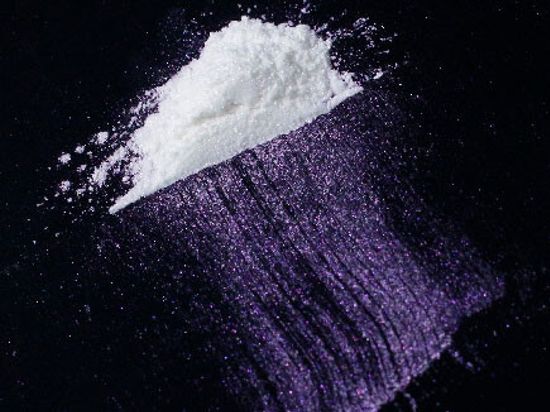
KT-8213 is a violet pearl pigment built on a synthetic calcium aluminum borosilicate substrate, delivering a bright interference violet over dark substrates with a noticeably higher brilliance and transparency than standard mica-based alternatives. Its fine flake geometry produces smooth, uniform coverage suited for cosmetic formulations and decorative coatings. As a pearlescent pigment in Kolortek's Dreamstar Borosilicate Series, it combines diamond-like reflectivity with reliable batch consistency.
Item No. :
KT-8213Color Effect :
Bright VioletParticle Size :
10-60μmComposition :
Calcium Aluminum Borosilicate, Titanium Dioxide, Tin DioxideBrand :
Kolortek / OEMMOQ :
25KGApplication :
Cosmetics, Nail Products, Coatings, Printing Inks, Plastics, Resin Art, Specialty Decorative, etc.KT-8213 is a fine-particle borosilicate pearl pigment with a particle size range of 10–60μm. The substrate is synthetic calcium aluminum borosilicate, coated with titanium dioxide and tin oxide to produce the interference violet effect. It belongs to Kolortek's Dreamstar Series — a line based on borosilicate flakes rather than natural or synthetic mica.
The key distinction from mica-based interference pigments: borosilicate flakes are inherently smoother and more transparent. That translates to a cleaner, brighter color response and a more pronounced sparkle under direct light — characteristics that matter in both cosmetic and coating applications.
Worth noting: like all interference-series pigments, KT-8213 appears largely white or near-colorless when viewed in bulk or on a white substrate. The violet color becomes visible when the pigment is applied over or incorporated into dark backgrounds. This is standard interference behavior — not a color-shift or chameleon effect.
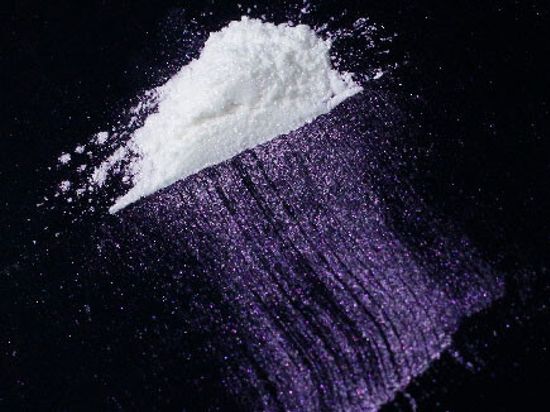
KT-8213 is the fine-particle entry point in a graduated series. The series spans from fine cosmetic-grade to large-flake sparkle formats:
| Model | Description | Particle Size | Composition |
|---|---|---|---|
| KT-8213 | Fine Flake Bright Violet | 10–60μm | Calcium Aluminum Borosilicate, TiO₂, Tin Oxide |
| KT-8233 | Glitter Bright Violet | 30–150μm | Calcium Aluminum Borosilicate, TiO₂, Tin Oxide |
| KT-8243 | Sparkle Bright Violet | 40–200μm | Calcium Aluminum Borosilicate, TiO₂, Tin Oxide |
| KT-8263 | Super Bright Violet | 60–400μm | Calcium Aluminum Borosilicate, TiO₂, Tin Oxide |
| KT-8273 | Super Sparkle Bright Violet | 600–1000μm | Calcium Aluminum Borosilicate, TiO₂, Tin Oxide |
In practice, KT-8213's 10–60μm range makes it the right choice for smooth-film applications — cosmetics, fine-dispersion inks, or coatings where surface texture needs to remain controlled. The larger grades (KT-8263, KT-8273) are better suited for nail gel, craft applications, or coatings where visual sparkle intensity outweighs surface smoothness.
KT-8213's fine particle size and cosmetic-compatible composition make it a practical fit across several end-use categories:
Borosilicate-based interference pigments require some handling awareness to perform at their best.
Dispersion: Low-shear mixing is strongly preferred. High-shear processing (bead milling, aggressive rotor-stator) will fracture flakes, reduce particle size distribution, and diminish both brightness and interference intensity. For cosmetic batches, hand-mixing or paddle mixing at moderate speed is typically sufficient. For coatings, add late in the mix cycle after viscosity is established.
Substrate color matters: The violet interference effect is substrate-dependent. On transparent or white substrates, the color reads as pale or near-white. Over black, dark navy, or deep-tinted bases, the violet becomes fully visible. If the end formula uses a light or white base, consider layering or switching to a dyed borosilicate option (e.g., KT-68860331 Sparkle Purple, which incorporates Red 28 for a color-stable purple regardless of substrate).
Compatibility: The inorganic coating system (TiO₂ / SnO₂) is chemically stable in most organic solvent and aqueous systems. No reported compatibility issues with standard cosmetic esters, silicones, or coating resins. pH extremes (<4 or >10) over extended periods should be evaluated case by case.
Loading levels: In cosmetics, typical use is 1–10% depending on the effect intensity desired. In coatings, 1–5% by weight in the final film is a reasonable starting point. Higher loadings don't linearly increase effect — flake crowding reduces orientation quality.
Both KT-8213 (borosilicate) and KT-219 (mica) cover the same particle size range (10–60μm) and share TiO₂/SnO₂ coating chemistry. The performance differences come from the substrate:
| Property | KT-8213 (Borosilicate) | KT-219 (Natural Mica) |
|---|---|---|
| Substrate | Synthetic calcium aluminum borosilicate | Natural mica |
| Transparency | Higher — cleaner light transmission | Standard |
| Brightness / Sparkle | Higher — diamond-like effect | Softer, more traditional pearl |
| Flake smoothness | Very smooth, uniform | Good, some natural variation |
| Batch consistency | High (synthetic substrate) | Good |
| Typical preference | High-gloss cosmetics, effect coatings | Classic pearl cosmetics, cost-sensitive applications |
That said, for formulators already running mica-based systems and looking for a near drop-in with enhanced brilliance, KT-8213 is the direct upgrade path.
Q: Will KT-8213 show violet color in a white or clear base coat?
No — not significantly. KT-8213 is an interference pigment. The violet effect is produced by thin-film light interference and is dependent on a dark or tinted background to be visible. In a clear or white system, it will appear as a subtle silver-white shimmer. For color-visible-on-any-substrate performance, consider a dyed borosilicate option such as KT-68860331.
Q: Is KT-8213 safe for use in cosmetics, including eye-area products?
The base composition — calcium aluminum borosilicate, titanium dioxide, tin oxide — is accepted in cosmetic formulations. Borosilicate-based pigments are used in decorative cosmetics including eye shadow. That said, regulatory compliance is region-specific. TDS, MSDS, and supporting compliance documentation are available from Kolortek to support your regulatory review.
Q: How does KT-8213 compare to larger-flake grades like KT-8243 or KT-8263?
Particle size directly affects the visual character. KT-8213 (10–60μm) produces a smooth, fine shimmer — consistent coverage with a soft glitter effect. KT-8243 (40–200μm) and KT-8263 (60–400μm) produce more visible individual flake sparkle, which reads as a stronger glitter rather than a smooth pearl. The right choice depends on the film thickness of your system and the desired visual intensity.
Q: Can KT-8213 be used in water-based coating systems?
Yes. The inorganic TiO₂/SnO₂ coating is stable in water-based systems across typical formulation pH ranges. Standard precautions apply: avoid prolonged exposure to strongly acidic or alkaline conditions, and use low-shear dispersion to protect flake integrity. For aqueous cosmetic emulsions, adding the pigment to the cool-down phase is recommended.
If you're evaluating KT-8213 for a specific formulation or need to compare it against other grades in the Bright Violet series, Kolortek provides samples, TDS, MSDS, and formulation support. Contact the technical team at contact@kolortek.com with your application details and target substrate for a more targeted recommendation.
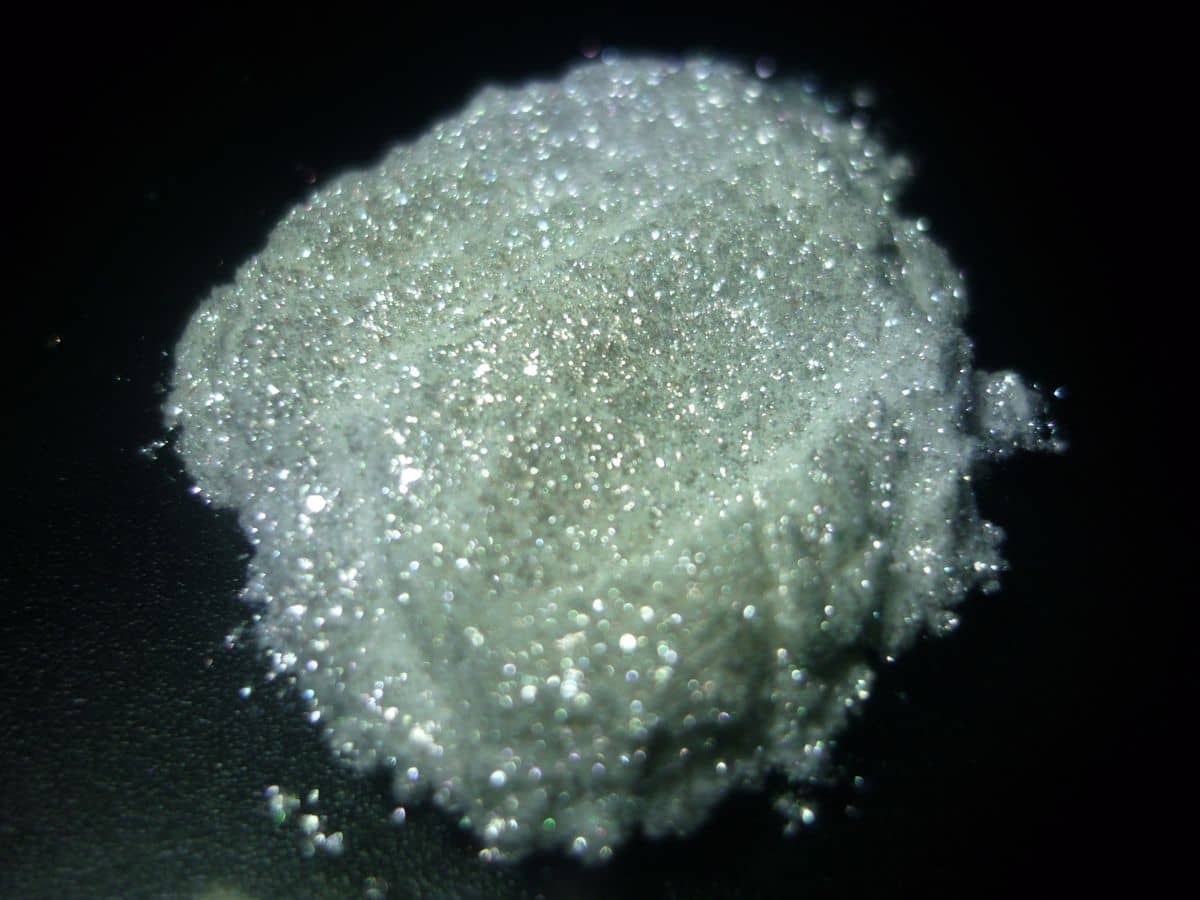
Kolortek Borosilicate Glass Pigments (Dreamstar Series) are effect pigments based on synthetic calcium aluminum borosilicate flakes coated with titanium dioxide and other metal oxides. The combination of high transparency, smooth platelet structure, and high refractive index produces a bright, diamond-like sparkle with exceptional brilliance compared to conventional mica-based pigments.These smooth, glass-flake structures offer superior brightness and chromatic purity, making them ideal for high-end automotive, cosmetic, and industrial applications.
Read More
KT-8213 is a violet pearl pigment built on a synthetic calcium aluminum borosilicate substrate, delivering a bright interference violet over dark substrates with a noticeably higher brilliance and transparency than standard mica-based alternatives. Its fine flake geometry produces smooth, uniform coverage suited for cosmetic formulations and decorative coatings. As a pearlescent pigment in Kolortek's Dreamstar Borosilicate Series, it combines diamond-like reflectivity with reliable batch consistency.
Read More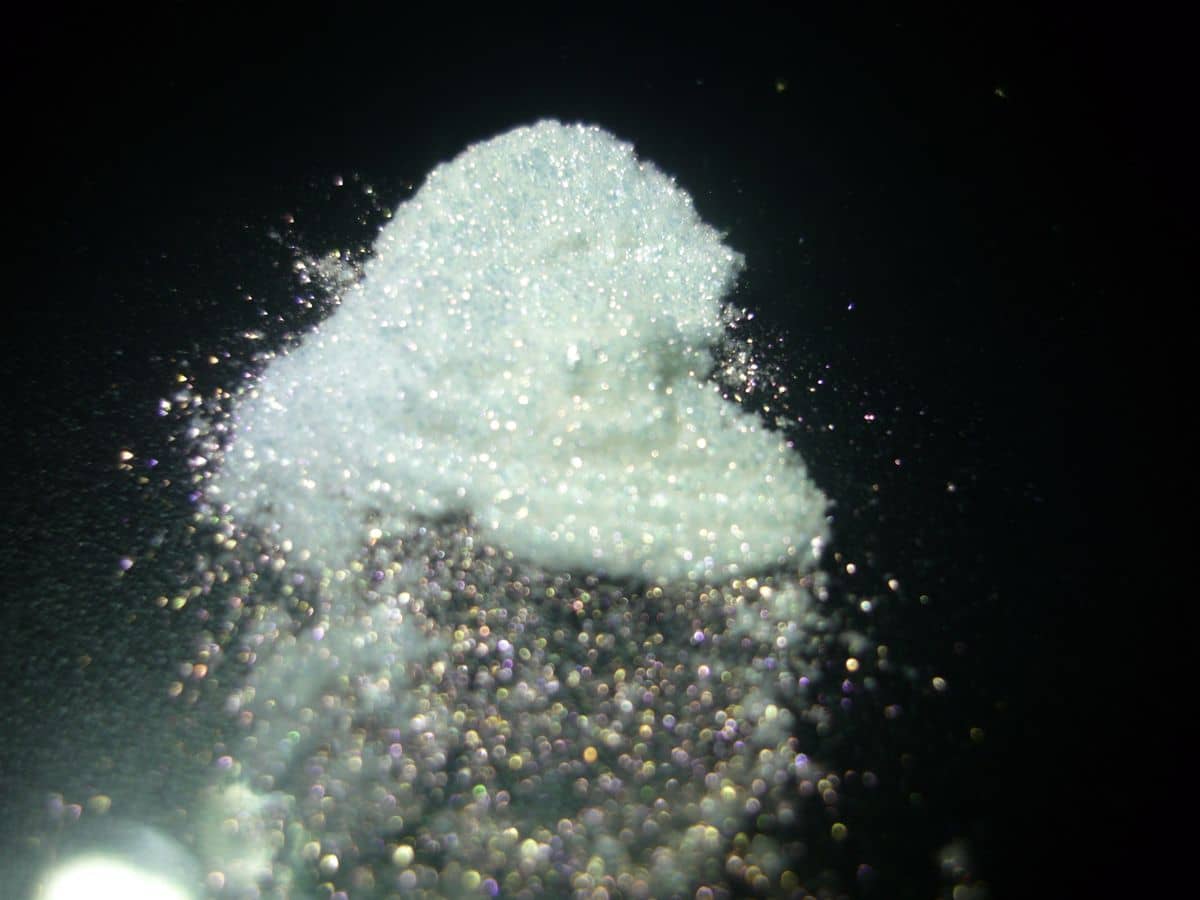
KT-8232 is a red glitter pigment built on a synthetic calcium aluminum borosilicate substrate, delivering an intense sparkling diamond effect with exceptional transparency and luminosity. As a high-performance borosilicate pigment, it combines a vivid bright red tone with large, smooth flake geometry that catches and reflects light at wide viewing angles. Well-suited for nail coatings, cosmetic formulations, craft art, and specialty printing applications.
Read More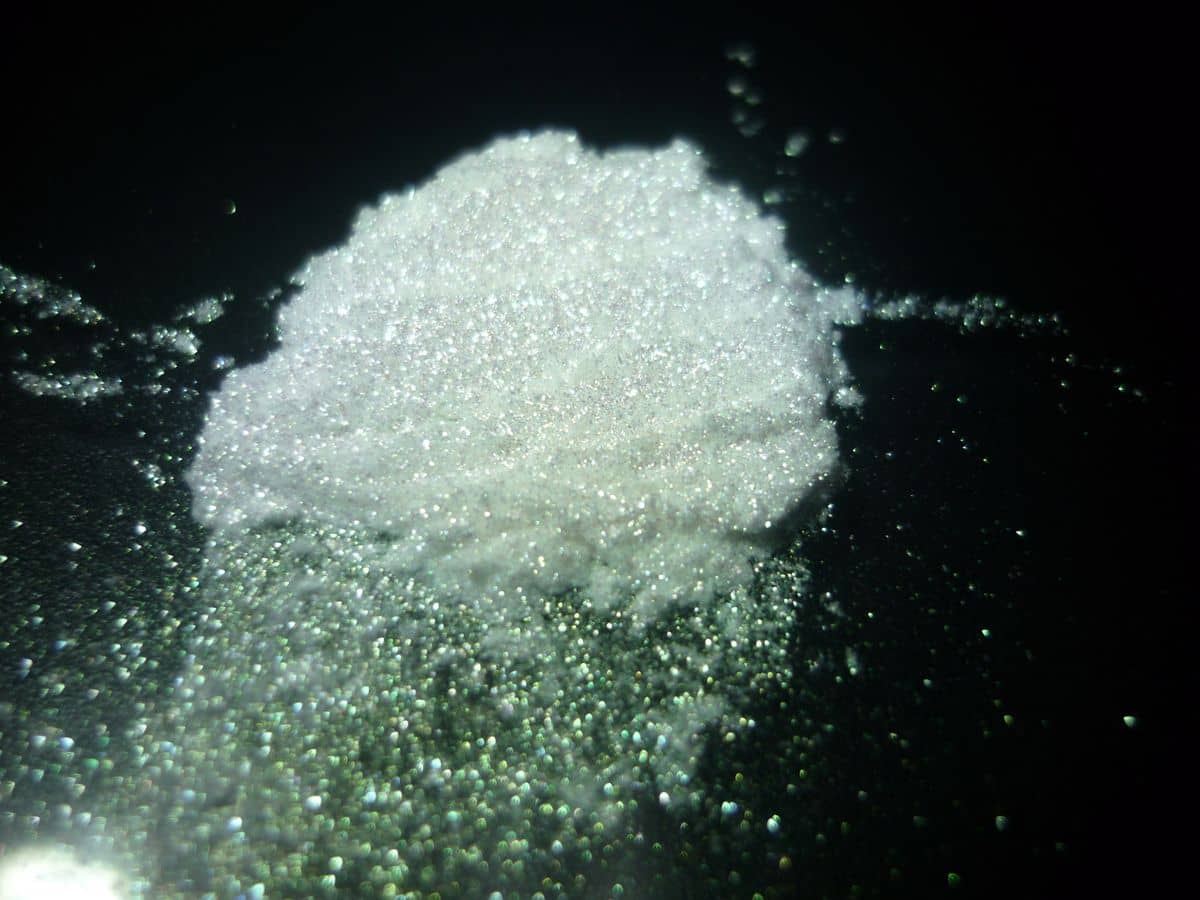
KT-8235 is a green glitter pigment built on a synthetic calcium aluminum borosilicate base, delivering a sparkling diamond-like brilliance with vivid, saturated green tone. As a high-performance borosilicate pearl, it produces noticeably higher brightness and transparency than standard mica-based pigments, making the flake structure visible and the color remarkably clean. Suited for cosmetic formulations, nail products, and decorative coatings where visual intensity is non-negotiable.
Read More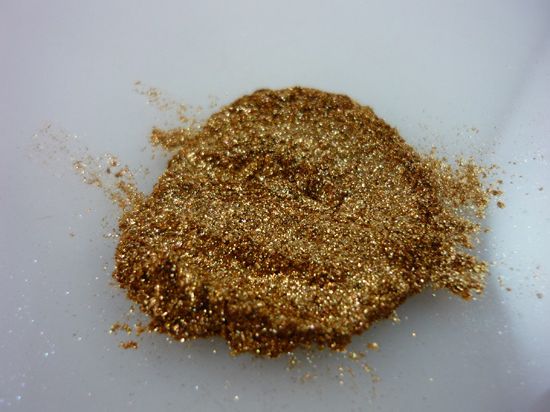
KT-88540 is a bronze pearl pigment built on a synthetic calcium aluminum borosilicate substrate, delivering a sparkling diamond-bright bronze effect with exceptional transparency and high reflectivity. The large, smooth flake geometry produces a dimensional metallic shimmer that stands apart from conventional mica-based bronzes. Suited for decorative cosmetics, coatings, and nail applications where intense sparkle and warm bronze tonality are required.
Read More
 English
 Français
 Deutsch
 Русский
 Español
 Português