
Leave A Message
If you are interested in our products and want to know more details,please leave a message here,we will reply you as soon as we can.
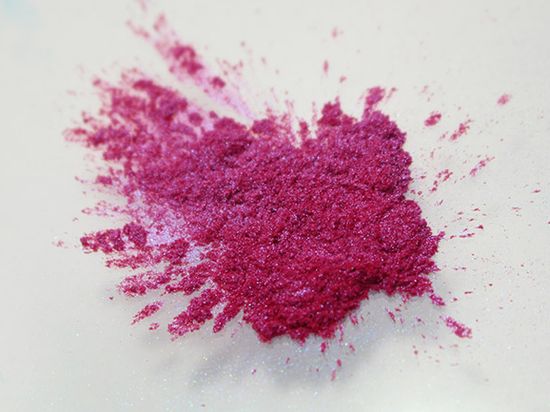
KT-7405 Synstar Red Blue is a synthetic Fluorphlogopite mica pearlescent pigment in the 10–60μm particle size range that produces a dual red-blue absorption color alongside a silver-white specular reflection — a color-complex grade that sits outside the standard single-hue range of the KT-7000 Multicolor Series.
Item No. :
KT-7405Color Effect :
Synstar Red BlueParticle Size :
10-60μmComposition :
FluorphlogopiteBrand :
Kolortek / OEMMOQ :
25 KG
Synstar Red Blue Synthetic Mica Pigment – KT-7405
Pearlescent Pigments › Multicolor Series › Synthetic Mica / Fluorphlogopite (KT-7000)
KT-7405 Synstar Red Blue is a synthetic Fluorphlogopite mica pearlescent pigment in the 10–60μm particle size range that produces a dual red-blue absorption color alongside a silver-white specular reflection — a color-complex grade that sits outside the standard single-hue range of the KT-7000 Multicolor Series. The "Red Blue" designation reflects a pigment that reads differently at different viewing and light conditions: the absorption color contains both red and blue spectral components, producing a nuanced, multi-dimensional visual character. On the Fluorphlogopite synthetic mica substrate, this complex color is delivered with higher substrate purity and fewer dark mineral inclusions than natural mica equivalents — relevant for nail, cosmetic, and decorative coating applications where surface quality at the platelet level affects the finished result.
The KT-7000 Synstar sub-range covers the main color variants in synthetic Fluorphlogopite mica at the standard 10–60μm particle size. KT-7405 Synstar Red Blue is a specialty color within this group — it combines red and blue absorption components for a more complex visual output compared to the pure single-hue grades.
| Item No. | Color Name | Particle Size | Hue Character |
|---|---|---|---|
| KT-7421 | Synstar Gold | 10–60μm | Warm gold pearl |
| KT-7415 | Synstar Red | 10–60μm | Clean red pearl |
| KT-7424 | Synstar Violet | 10–60μm | Violet pearl |
| KT-7419 | Synstar Purple | 10–60μm | Purple pearl |
| KT-7435 | Synstar Green | 10–60μm | Green pearl |
| KT-7405 | Synstar Red Blue | 10–60μm | Red-blue dual absorption — complex multi-dimensional color |
| KT-7422 | Crystal Gold | 10–60μm | Crystal gold pearl |
| KT-7423 | Synstar Orange | 10–60μm | Orange pearl |
Flash grades (10–100μm) are available for KT-7415 Red, KT-7419 Purple, KT-7435 Green, and specialty colors — see KT-7415A, KT-7419A, KT-7435A, KT-7482, KT-7483, KT-7484, KT-7485 in the KT-7000 flash range. Contact Kolortek for the complete Synstar color card.
| Parameter | Value / Notes |
|---|---|
| Item No. | KT-7405 |
| Color Name | Synstar Red Blue |
| Series | KT-7000 Multicolor Series — Synthetic Mica (Synstar) |
| Particle Size | 10–60μm |
| Substrate | Fluorphlogopite (synthetic mica) — higher purity than natural muscovite mica |
| Composition | Fluorphlogopite + deposited red-blue dual light-absorbing colorant |
| Visual Effect | Silver-white specular reflection + dual red-blue absorption color at side/diffuse angles |
| Substrate Purity Advantage | Fewer dark mineral inclusions vs. natural mica — cleaner color and luster |
| Color Complexity | Dual-component red + blue — more complex visual character than single-hue grades |
| Substrate Dependency | Absorption color visible on any substrate; silver specular most pronounced on dark bases |
| Binder Compatibility | Water-based, solvent-based, UV-curable, wax, epoxy resin systems |
| Natural Mica Equivalent | KT-6000 series — lower substrate purity, higher mineral inclusion count |
| Documentation | TDS, SDS on request |
| Brand | Kolortek |
Dual-component red-blue absorption — complex color behavior: Standard KT-7000 Synstar grades deposit a single-hue colorant on the Fluorphlogopite mica substrate. KT-7405 Synstar Red Blue uses a colorant system that absorbs across both the red and blue spectral regions simultaneously. The resulting absorption color is not a simple purple (which would result from equal red and blue) but a complex, shifting hue that reads differently depending on the light source angle, viewing angle, and base color beneath it. In practice, this produces a more visually interesting surface than a single-hue red or blue grade alone — useful in nail lacquer, cosmetics, and decorative coatings where color depth and complexity are part of the design brief.
Synthetic Fluorphlogopite — substrate quality rationale: Fluorphlogopite is manufactured synthetically from controlled raw materials without the trace mineral inclusions present in natural muscovite mica. In a complex dual-color grade like KT-7405, the cleaner substrate allows the dual red-blue absorption to express fully without the visual noise of dark inclusion spots. At 10–60μm, individual platelets are not large enough to see individually under most viewing conditions, but substrate purity still affects the overall color saturation and luster clarity across the pigment mass.
Application on varied substrate colors: The red-blue absorption color of KT-7405 is visible across dark, light, and transparent substrates — no dark base is required. Over dark or black bases, the silver specular flash contrasts more strongly with the base, amplifying the dimensional quality of the dual red-blue color at diffuse angles. Over transparent resin or clear systems, the complex color is visible through the depth of the application medium.
| Application | How KT-7405 Contributes | Notes |
|---|---|---|
| Nail lacquer | Complex red-blue pearl shimmer in standard and gel nail formulations | Synthetic mica purity gives cleaner color development in thin nail film; visible over all base coat colors |
| Decorative coatings | Dual-tone red-blue pearl in wall paint, furniture, and architectural finishes | Add at letdown stage; low-shear mixing; complex color reads differently in different lighting |
| Epoxy & craft resin | Complex red-blue pearl through the depth of clear resin castings | Transparent resin allows full dual-color absorption to read through the pour depth |
| Soap making | Dual-tone red-blue shimmer in melt-and-pour and cold process soap | Stable in mildly alkaline matrices; complex color visible in translucent soap bases |
| Printing inks | Complex red-blue pearl ink for specialty packaging and decorative labels | Specify 5–25μm grade for printing — confirm D90 against nozzle spec; 10–60μm standard grade is not suitable for most press configurations |
Low-shear addition — standard mica pearl protocol: Add KT-7405 at the letdown stage after all high-shear dispersion steps are complete. Use low-shear paddle or anchor mixing. Platelet fracture from high-shear equipment reduces D50, which reduces luster clarity and flattens the dual-color absorption character. The complex visual of KT-7405 depends on intact platelet geometry — compromising this through mechanical shear eliminates the effect that justifies the synthetic mica grade selection.
Evaluating the dual-color effect: The red-blue absorption color of KT-7405 reads differently under different lighting conditions — incandescent, fluorescent, and daylight all emphasize different aspects of the dual absorption. If you are qualifying this grade for a specific product, evaluate drawdown samples under all relevant lighting conditions the finished product will encounter, not only in the lab under a single light source. The color complexity that makes KT-7405 visually interesting in some lighting conditions may read differently in others.
Kolortek has produced the KT-7000 synthetic mica Multicolor Series alongside the broader pearlescent pigment range for over 20 years, with consistent colorant deposition and D50 particle size distribution across batches. TDS and SDS are available on request for KT-7405.
Q: What does "Red Blue" mean as a color designation — is it purple?
A: Not exactly. Synstar Red Blue designates a pigment whose colorant absorbs across both the red and blue spectral regions simultaneously. The visual result contains both red and blue color components, but the ratio and the way they interact with different light sources and viewing angles means the color reads as more complex than a simple purple — which is what you get when red and blue are mixed in a flat colorant system. In practice, KT-7405 will read differently in incandescent versus cool white fluorescent light, and differently at direct versus oblique viewing angles, due to the interaction between the silver specular reflection and the dual-component absorption. Evaluating drawdown samples under multiple lighting conditions is the most reliable way to understand how this grade will perform in your specific application.
Q: When should I choose KT-7405 Synstar Red Blue over KT-7424 Synstar Violet?
A: KT-7424 Synstar Violet is a single-hue violet pearl — consistent, predictable violet-purple at all lighting and viewing conditions. KT-7405 Synstar Red Blue is a dual-component grade with more complex, variable color behavior that responds differently to different light and angle conditions. Choose KT-7424 when you need a consistent violet pearl that reads the same across all lighting environments. Choose KT-7405 when the design intent is a more complex, multi-dimensional color character that changes subtly depending on light source and viewing angle — a more distinctive visual at the cost of less color predictability.
Q: Is a natural mica equivalent of this color available?
A: The KT-6000 natural mica Multicolor Series covers a broad range of single-hue colors but does not include a direct "Red Blue" equivalent. The KT-7000 synthetic series is where the more complex and specialty color combinations are available. If cost is a constraint and substrate purity is not critical, a blend of KT-6000 red and blue grades could approximate the visual — but the blend behavior and substrate inclusion count would differ. Contact Kolortek to discuss the options.
The dual red-blue character of KT-7405 Synstar Red Blue is best understood from a physical drawdown sample evaluated under multiple lighting conditions. Contact Kolortek to request a sample alongside comparative Synstar grades, download the TDS, or discuss the full KT-7000 Synstar color range for your formulation development.
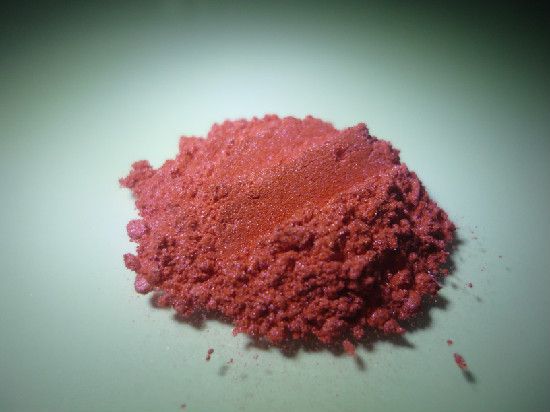
KT-6025 is a True Red natural mica pearlescent pigment in the 10–60μm particle size range — a colored mica grade from the KT-6000 Multicolor Series, produced by depositing a light-absorbing red colorant layer on a TiO₂-coated mica substrate. The result is a dual-effect visual: a silver-white reflection at the specular viewing angle and a saturated red absorption color at side and diffuse angles. At 10–60μm, KT-6025 suits coatings, nail lacquer, decorative applications, soap, and epoxy systems where a clean, high-chroma red pearlescent effect is required across a range of substrates.
Read More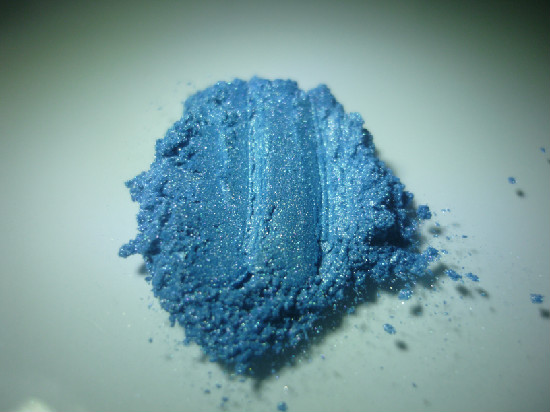
KT-6040 is an Ocean Blue natural mica pearlescent pigment — a colored mica grade from the KT-6000 Multicolor Series that produces a rich ocean blue absorption color at side and diffuse viewing angles, with a silver-white specular reflection at the direct reflection angle. At the standard 10–60μm particle size, it delivers a balanced blue pearl shimmer for coatings, nail lacquer, soap, epoxy systems, and decorative applications. Multiple particle size grades are available — from 5–25μm for printing inks and fine cosmetics to 30–150μm for bold sparkle in epoxy and craft resin — making Ocean Blue adaptable across a broad range of application methods and visual targets.
Read More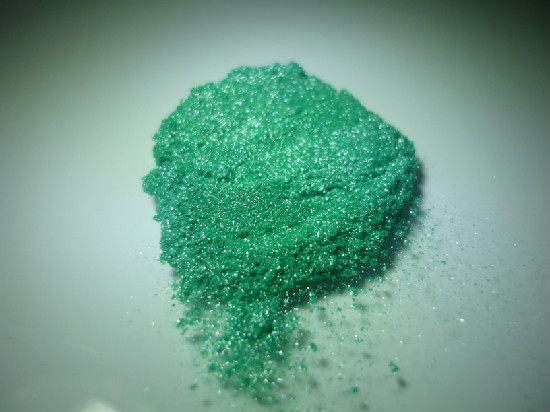
KT-6057 is a Flash Green natural mica pearlescent pigment in the 10–100μm particle size range — the coarser-format green grade in the KT-6000 Multicolor Series, optimized for applications where visible individual-platelet green sparkle is required alongside the silver specular reflection characteristic of the series. The 10–100μm distribution spans both the fine fraction (contributing green pearl background coverage) and the coarse fraction (contributing visible individual flash points) — producing a green pearl surface with pronounced sparkle that the standard 10–60μm grade does not achieve at equivalent loading. Epoxy flooring, decorative coatings, nail lacquer, and craft resin are the primary application contexts.
Read More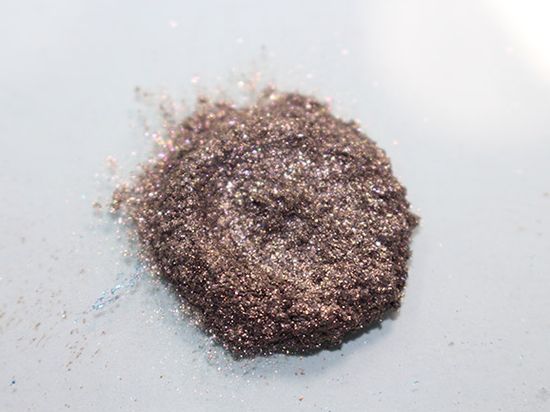
KT-7059 is a Bright Red synthetic mica pearlescent pigment in the coarse 30–150μm particle size range — a Fluorphlogopite-based colored mica grade from the KT-7000 series that delivers a bold red glitter sparkle effect with a silver-white specular reflection. The 30–150μm distribution positions KT-7059 firmly in the glitter-sparkle end of the spectrum: individual platelet reflections are clearly visible at normal viewing distances, making it well-suited for epoxy flooring, resin art, craft applications, nail lacquer, and decorative coatings where maximum red sparkle impact is the design target. The synthetic Fluorphlogopite substrate provides higher purity and fewer dark mineral inclusions than the natural mica equivalent.
Read More
KT-7405 Synstar Red Blue is a synthetic Fluorphlogopite mica pearlescent pigment in the 10–60μm particle size range that produces a dual red-blue absorption color alongside a silver-white specular reflection — a color-complex grade that sits outside the standard single-hue range of the KT-7000 Multicolor Series.
Read More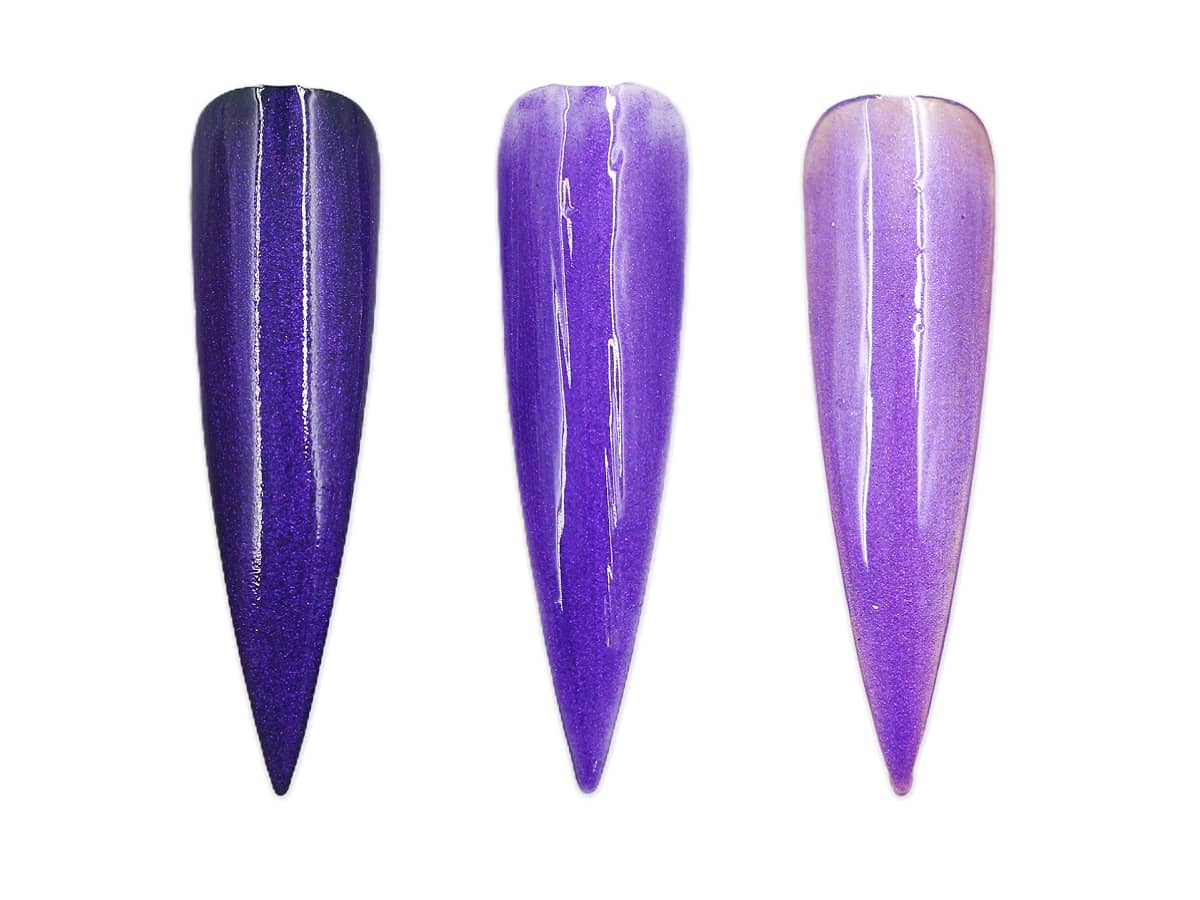
KT-7419A is a Flash Purple synthetic Fluorphlogopite mica pearlescent pigment in the 10–100μm particle size range — the coarser flash-grade variant of KT-7419 Synstar Purple, designed for applications where visible individual-platelet purple sparkle is required alongside background pearl coverage.
Read More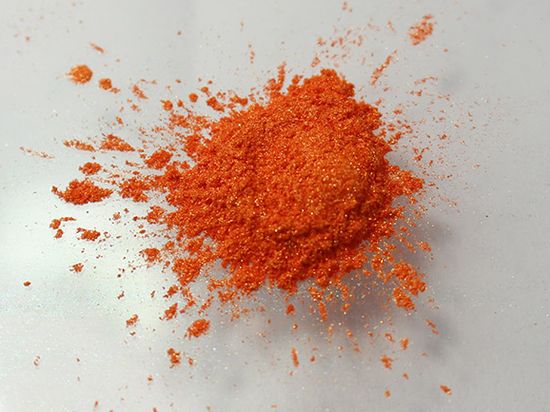
KT-7423 Synstar Orange is a synthetic Fluorphlogopite mica pearlescent pigment in the standard 10–60μm particle size range that delivers a warm orange absorption color at side and diffuse viewing angles alongside a silver-white specular reflection at the direct angle
Read More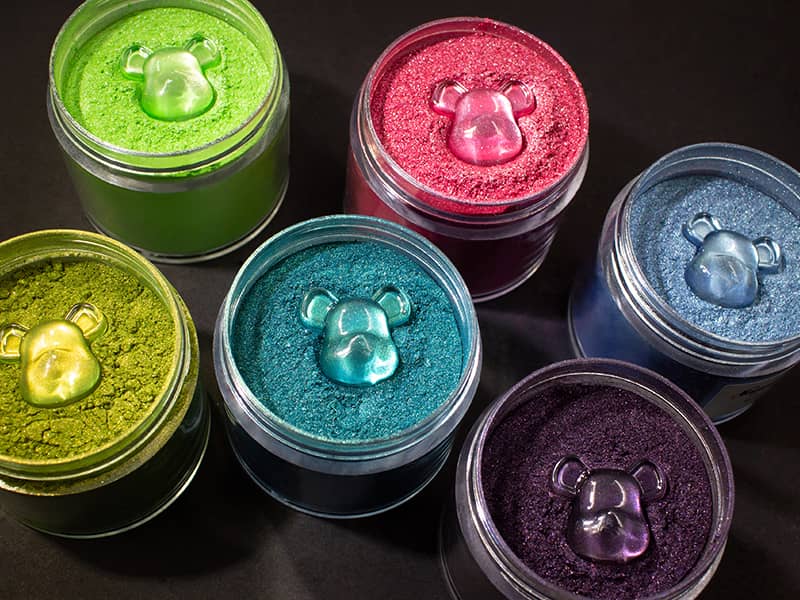
Kolortek's coloured mica powder multicolor offering spans natural mica and synthetic mica substrates, with dedicated cosmetic-grade variants and industrial-grade options across multiple series.
Read More
 English
 Français
 Deutsch
 Русский
 Español
 Português