Leave A Message
If you are interested in our products and want to know more details,please leave a message here,we will reply you as soon as we can.
Shimmery Effect Pigments for Edible Drink Applications
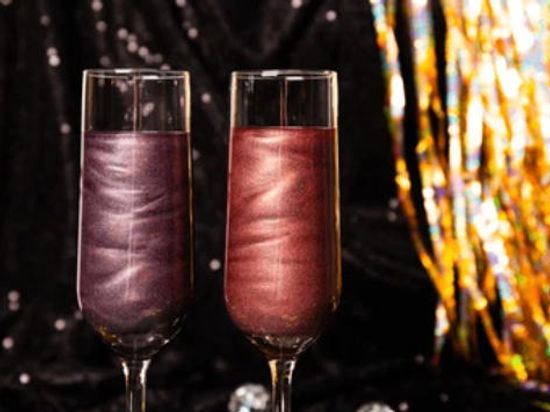
Edible glitter for cocktails and specialty beverages has become a serious formulation requirement — not just a novelty — as bars, beverage brands, and food manufacturers look to deliver memorable visual experiences. Pearlescent mica-based powders are the standard choice, offering gold, silver, and full-spectrum shimmer effects that remain suspended or settle into attractive patterns in liquid formats. Whether used as luster dust for drinks or blended directly into liquid systems, these pigments add a distinctive shimmering finish that elevates the drink's presentation at point of service.
The demand for shimmer in beverages spans a wide range of formats: craft cocktails, sparkling wines, bottled RTD drinks, mocktails, bubble teas, and flavored spirits. In bar and hospitality settings, the shimmer effect is typically activated at the moment of serving — either pre-mixed into the liquid or dusted directly onto the surface. In commercial beverage manufacturing, the pigment is incorporated during the filling or blending stage, requiring stability under different pH conditions, alcohol concentrations, and temperature profiles.
The key distinction between decorative and functional use: in cocktail bars, particle behavior (suspension vs. sedimentation) is part of the visual appeal. In bottled beverages, uniform dispersion and long-term stability matter more. Choosing the right particle grade for each scenario is where most formulators start.
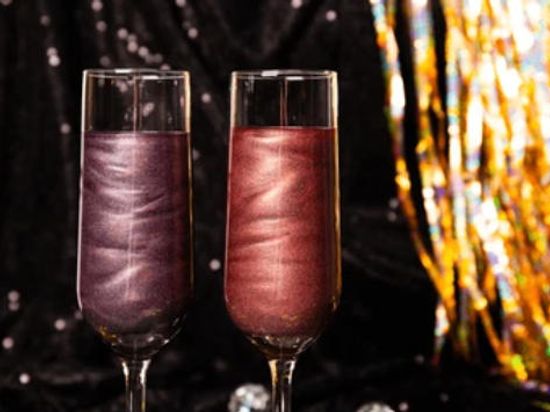
Pearlescent edible pigments function through light interference on the mica substrate surface — producing that characteristic shimmer, gloss, and depth of color that synthetic dyes simply cannot replicate. In liquid media, this optical behavior is highly angle-dependent, meaning the shimmer shifts as the glass moves or the liquid swirls — which is precisely what makes it visually compelling in a drink context.
In practice, finer particle grades (roughly below 60μm) tend to produce a smoother, satin-like shimmer and disperse more uniformly in liquids. Coarser grades — sparkle and flash series — generate larger individual glint points visible to the eye, which works well for a dramatic cocktail effect but can settle out more quickly in a still liquid. Neither is wrong; they serve different product intentions.
Kolortek's Edible Glitter Series covers two main lines relevant to drink formulation:
| Series | Key Characteristics | Best For |
|---|---|---|
| Standard Edible Glitters (TiO₂-containing) | Broad color range (silver, gold, red, violet, blue, green, bronze, white); fine to sparkle grades | General cocktail applications, colored shimmer drinks, cost-effective shimmer in non-EU markets |
| Titanium Dioxide Free Edible Glitters | Natural and synthetic substrate options; silver-white and gold naturals; extended color range including yellow, red, violet, blue-green, orange, brown | EU-compliant formulations, clean-label RTD beverages, natural positioning |
The TiO₂-free line has become increasingly important for European market compliance, where titanium dioxide as a food additive faces regulatory restrictions. If you're formulating for EU distribution, this is not optional — it needs to be built into the selection process from the start.
Several performance parameters matter in liquid applications specifically:
In direct-to-drink applications (bartending, hospitality), edible drink glitter is typically used as a dry dust added directly to the glass or shaker. No pre-dispersion is needed — the mechanical action of pouring or stirring handles distribution. Dosage is by visual judgment in this context, making particle grade selection (fine vs. sparkle) the primary formulation decision.
In industrial beverage production, pre-dispersion in a small amount of the liquid base (water, syrup, alcohol) before full-batch mixing improves uniformity. Dry blending directly into a large volume of liquid can cause localized clumping, especially with fine-grade powders in high-sugar or high-viscosity systems.
One limitation is that these pigments are not soluble — they remain as suspended particulates. This means they will eventually settle in a non-turbulent liquid environment. For bottled products, this is often addressed with on-label instructions (shake before serving) rather than attempting to reformulate the suspension behavior, which is a practical approach rather than a compromise.
Choosing between fine and coarse grades affects both the visual outcome and handling behavior in drink systems:
| Grade Type | Visual Effect | Suspension | Typical Use |
|---|---|---|---|
| Fine / Satin (10–60μm) | Smooth, soft shimmer; uniform glow | Longer suspension time | Bottled RTD, wine, still beverages |
| Shimmer (40–200μm) | Visible glint; moderate sparkle | Moderate | Cocktails, mixed drinks, spritzers |
| Sparkle / Flash (50–500μm) | Large glint points; high drama | Settles relatively quickly | Bar service cocktails, dessert drinks |
From a formulation standpoint, here is what consistently holds up in practice:
Are these pigments safe to ingest in beverage quantities?
Yes. The edible glitter series is formulated from food-grade mica and compliant colorants that meet international food safety standards. They are intended for ingestion and used in commercially produced food and drink products globally. That said, always verify compliance with the specific regulatory framework of your target market — requirements differ between the US (FDA), EU, and other jurisdictions.
Why do some pigments settle at the bottom of the drink?
Mica-based pigments are particulate, not soluble, so gravity will eventually pull them down in a still liquid. This is inherent to the material class. Finer grades slow this process. In practice, settling is often embraced as a visual feature (shimmer pool at the bottom of a glass) rather than treated as a defect.
Can edible glitter be used in hot beverages?
Generally yes — mica substrates are thermally stable well above typical hot beverage temperatures. However, some organic colorants used for specific hues may show color shift at sustained high temperatures. Testing under your actual processing conditions is recommended before committing to a specific color for a hot drink application.
What is the difference between "natural" and "synthetic" substrate options in the TiO₂-free line?
Natural substrate grades use mica derived from natural mineral sources. Synthetic substrate grades use lab-produced mica (fluorphlogopite), which offers tighter particle size control and higher optical uniformity. For applications where precise shimmer intensity and batch-to-batch color consistency are priorities, synthetic substrate grades are often the more reliable choice despite a higher unit cost.
If you are developing a shimmer drink product or need guidance on grade selection for a specific liquid system, reach out directly. Sample sets, technical data sheets, and formulation guidance are available for qualified inquiries.
Contact the technical team at contact@kolortek.com to discuss your application requirements, request COA documentation, or arrange sample evaluation.
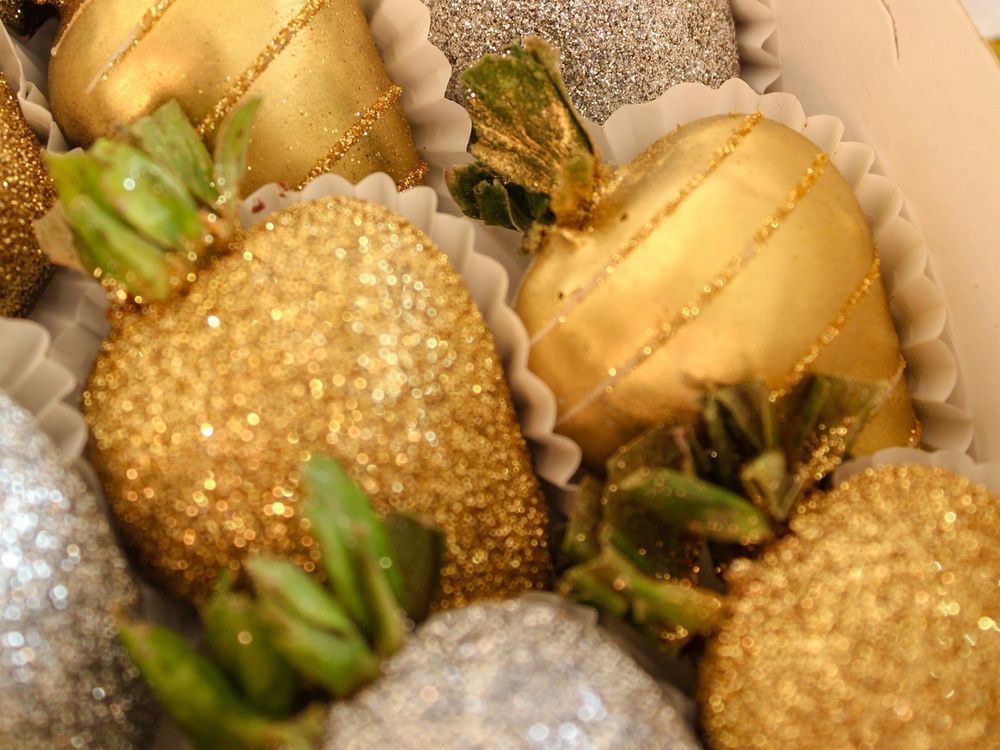
Edible glitter dust and pearlescent food dust are mica-based powders used to apply shimmer, gloss, and metallic effects to cakes, chocolates, cocktails, and a wide range of confections. Formulated from food-safe ingredients and compliant with international food safety standards, these powders deliver gold, silver, pearl, and vivid color effects directly on edible surfaces. Where visual presentation drives product value — from bakery counters to craft cocktails — this category of decoration material has become a standard tool in both artisan and industrial food finishing.
Read More
Edible glitter for cocktails and specialty beverages has become a serious formulation requirement — not just a novelty — as bars, beverage brands, and food manufacturers look to deliver memorable visual experiences. Pearlescent mica-based powders are the standard choice, offering gold, silver, and full-spectrum shimmer effects that remain suspended or settle into attractive patterns in liquid formats. Whether used as luster dust for drinks or blended directly into liquid systems, these pigments add a distinctive shimmering finish that elevates the drink's presentation at point of service.
Read More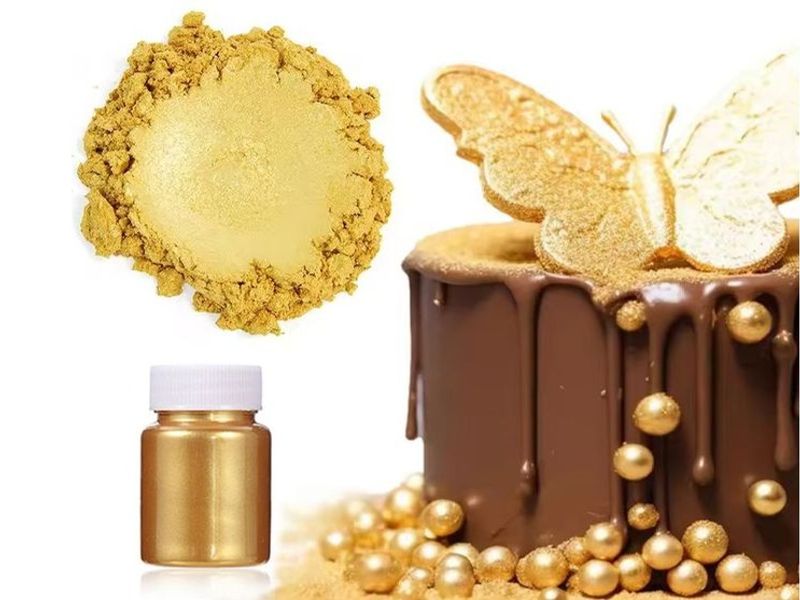
Cake decorating with edible gold dust and food-grade pearlescent pigments has become standard practice for professional bakers and confectionery studios looking to add genuine metallic shimmer and lustrous pearl effects to finished products. These pigments — formulated from natural, food-safe ingredients — deliver consistent shimmery coverage across fondant, buttercream, chocolate, and sugar surfaces. Whether dusted directly onto tiers or mixed into a painting medium, cake pearl dust and related edible shimmer formats give decorators precise control over effect intensity, from a soft satin glow to a bold, reflective finish, making them the go-to choice wherever edible shimmer powder for cakes is specified.
Read More
 English
 Français
 Deutsch
 Русский
 Español
 Português