
Leave A Message
If you are interested in our products and want to know more details,please leave a message here,we will reply you as soon as we can.
Orange Yellow Fluorescent Powder, Neon Color 1–5μm – KT-FDS422
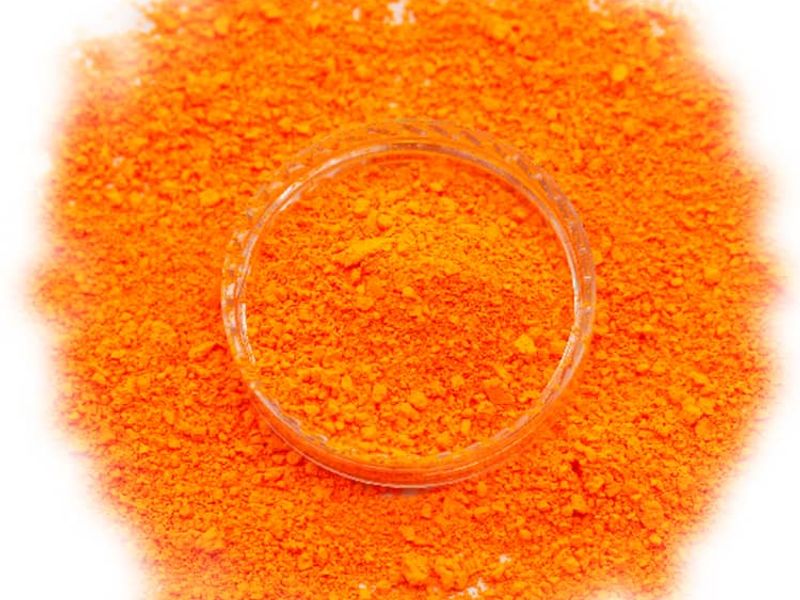
KT-FDS422 is an orange-yellow fluorescent powder in the fine 1–5μm particle size range — a neon-grade daylight fluorescent pigment that produces a high-chroma orange-yellow color significantly brighter than conventional pigments by converting absorbed light (including UV) into visible fluorescent emission.
Item No. :
KT-FDS422Color Effect :
Orange YellowParticle Size :
1-5 μmBrand :
Kolortek / OEMMOQ :
25KGApplication :
Printing Inks, Paints & Coatings, Plastics, Cosmetics, Textiles, Safety Markings, Entertainment, Craft
Orange Yellow Fluorescent Powder, Neon Color 1–5μm – KT-FDS422
Special Effect Pigments › Fluorescent Pigment Series
KT-FDS422 is an orange-yellow fluorescent powder in the fine 1–5μm particle size range — a neon-grade daylight fluorescent pigment that produces a high-chroma orange-yellow color significantly brighter than conventional pigments by converting absorbed light (including UV) into visible fluorescent emission. At 1–5μm, KT-FDS422 is optimized for printing inks, coatings, and plastic compounding where fine particle size is necessary for smooth ink film formation, uniform color development, and compatibility with tight tolerances. The orange-yellow position on the fluorescent color spectrum makes it a practical choice for safety marking, high-visibility signage, and branded packaging where maximum color intensity in daylight conditions is a specification requirement.
Conventional pigments reflect a portion of incident light in their characteristic color and absorb the rest. Fluorescent pigments do something additional: they absorb light — including the UV component in daylight — and re-emit part of that absorbed energy as visible light at a slightly longer wavelength. The emitted fluorescent light combines with the reflected light in the same color region, producing a total luminous output that exceeds what simple reflection can achieve. The effect is a color that appears to glow under normal daylight conditions, particularly when UV is present.
Important distinction: Fluorescent pigments (neon pigments) like KT-FDS422 are daylight-active — they require incident light to produce their effect and stop glowing immediately when the light source is removed. They are often confused with glow-in-the-dark (phosphorescent) pigments, which store energy and emit it in the dark. These are fundamentally different materials. Kolortek's glow-in-the-dark range is a separate product family — see the Glow in Dark Pigment Series.
| Item No. | Color | Neon Hue Position |
|---|---|---|
| KT-FDS420 | Green Yellow | Cool neon yellow-green |
| KT-FDS421 | Green | Neon green |
| KT-FDS422 | Orange Yellow | Warm neon orange-yellow — high visibility |
| KT-FDS423 | Orange | Neon orange |
| KT-FDS424 | Orange Red | Neon orange-red — warm red shift |
The full Kolortek fluorescent series covers green-yellow through orange-red and extends to additional colors. All standard grades are at 1–5μm particle size. Contact Kolortek for the complete color range and availability of additional particle size grades.
| Parameter | Value / Notes |
|---|---|
| Item No. | KT-FDS422 |
| Color | Orange Yellow — neon / daylight fluorescent |
| Effect Type | Daylight fluorescent — active only under incident light; does NOT glow in the dark |
| Particle Size | 1–5μm |
| Form | Fine powder |
| Fluorescence Mechanism | Absorbs UV and visible light; re-emits as visible fluorescent light — total luminous output exceeds conventional reflection |
| Lightfastness | Moderate — fluorescent pigments have lower UV stability than inorganic pigments; outdoor lightfastness is application-dependent. Contact us for specific data. |
| Heat Stability | Application-dependent — contact us for processing temperature guidance |
| Binder Compatibility | Water-based, solvent-based, UV-curable systems; plastic compounding — confirm compatibility for specific resin types |
| Primary Applications | Printing inks, coatings, plastics, safety marking, textiles, cosmetics |
| Documentation | TDS, SDS on request |
| Brand | Kolortek |
Why orange-yellow fluorescent reads as "neon" in daylight: In the orange-yellow wavelength range (approximately 560–600nm), the eye has high photopic sensitivity. Fluorescent emission in this range compounds the naturally high visual response — the combined reflected and emitted light at these wavelengths produces a luminance level that appears to exceed the illuminated surface, which the brain interprets as the characteristic "neon" appearance. This is why orange-yellow and yellow-green fluorescent colors are standard for high-visibility safety applications — not because of dye chemistry alone, but because of the coincidence between peak fluorescent emission and peak human visual sensitivity.
Fine 1–5μm particle size — printing and coating compatibility: Fluorescent pigments at coarser particle sizes can produce grainy or uneven color in printing inks and thin coating films. The 1–5μm distribution of KT-FDS422 ensures smooth ink film formation in gravure, flexo, and screen printing applications, uniform color development in coatings, and processability in plastic compounding without visible particle agglomeration in the molded part.
Lightfastness limitation — the standard constraint of all fluorescent pigments: Fluorescent organic pigments have lower UV stability than inorganic pigments such as iron oxides or ultramarines. Prolonged outdoor UV exposure causes fluorescence intensity to fade before the underlying color completely disappears. For permanent exterior applications, UV-stabilized binder systems and protective topcoats extend the effective service life. For indoor applications, point-of-purchase displays, and short-term promotional use, the lightfastness of organic fluorescent pigments is generally adequate. Contact Kolortek for specific lightfastness test data relevant to your application conditions.
| Application | How KT-FDS422 Contributes | Notes |
|---|---|---|
| Printing inks | Neon orange-yellow in gravure, flexo, screen, and UV-curable inks | 1–5μm suitable for most press nozzle configurations; confirm D90 against nozzle tolerance for fine gravure |
| Coatings | High-visibility neon color in industrial coatings, safety markings, traffic control products | UV-stabilized binder recommended for outdoor applications to extend fluorescence service life |
| Plastics | Neon orange-yellow color in injection molding, film, and extrusion applications | Confirm heat stability for processing temperature; 1–5μm disperses well in masterbatch systems |
| Packaging & labels | Neon orange-yellow for high-impact promotional and product packaging | Indoor use — fluorescence intensity well-maintained under display and retail lighting conditions |
| Textiles & paper | Neon color in high-visibility workwear, safety vests, fluorescent paper | Compatibility with textile binders and coating systems varies — bench testing recommended |
| Cosmetics & nail | Neon orange-yellow in UV-reactive nail art, body paint, and specialty cosmetic products | Confirm regulatory compliance for your target market before specifying for cosmetic use |
Q: Is KT-FDS422 the same as a glow-in-the-dark pigment?
A: No — these are fundamentally different materials. KT-FDS422 is a daylight fluorescent (neon) pigment that requires incident light to produce its effect. When the light source is removed, it stops glowing immediately. Glow-in-the-dark (phosphorescent) pigments store energy under light exposure and release it slowly in the dark. Kolortek supplies both types — the Glow in Dark Pigment Series covers phosphorescent grades. The two are often confused because "fluorescent" is colloquially used for both, but they are chemically distinct and serve different application needs.
Q: How long does the neon color of KT-FDS422 last outdoors?
A: Outdoor lightfastness of fluorescent organic pigments is lower than inorganic pigments — UV exposure causes gradual fade of the fluorescence intensity over time. The rate of fading depends on UV intensity, binder protection, and film thickness. In UV-stabilized binder systems with appropriate topcoat protection, exterior service life can be extended significantly compared to unprotected films. Contact Kolortek for application-specific lightfastness data and binder recommendations for your target service life.
Q: What is the difference between KT-FDS422 Orange Yellow and KT-FDS423 Orange?
A: KT-FDS422 Orange Yellow sits between green-yellow and pure orange on the neon color spectrum — it has a warmer yellow bias than green-yellow but is not as fully saturated orange as KT-FDS423. In practical terms, KT-FDS422 reads as the warm neon yellow commonly used for high-visibility safety marking (traffic cones, safety vests, road markings); KT-FDS423 shifts toward a purer neon orange. Both are at 1–5μm. Request samples of both to compare under your specific lighting conditions before specifying.
Neon fluorescent color appearance varies significantly with binder system, substrate color, film thickness, and lighting conditions — bench evaluation in your specific application is the most reliable qualification step. Contact Kolortek to request a sample of KT-FDS422 alongside adjacent colors in the fluorescent range, download the TDS, or discuss formulation guidance for your specific application.
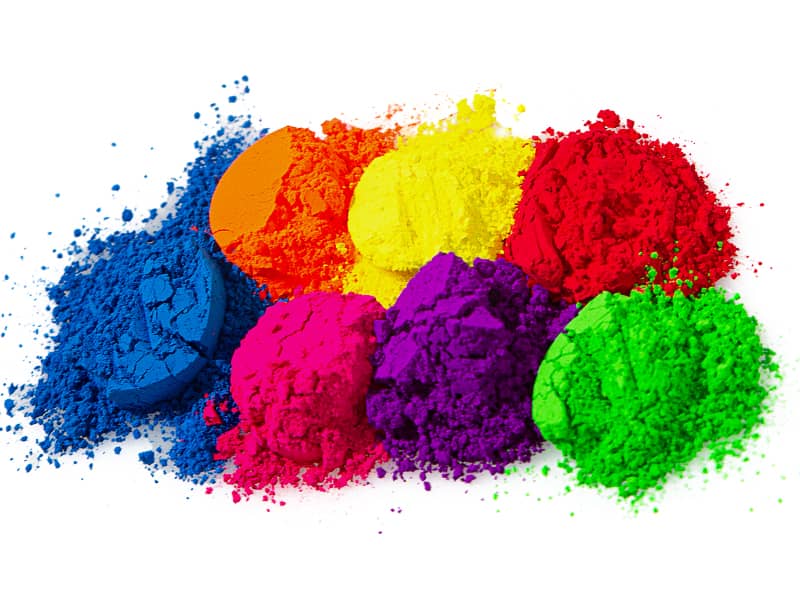
Fluorescent pigments — also referred to as neon pigments — produce colors that appear significantly brighter than conventional pigments under the same lighting conditions. This is because they absorb UV and short-wavelength visible light and re-emit it as visible fluorescence, adding emitted light to reflected light. The result is a color intensity that standard pigments cannot achieve through reflection alone. Kolortek's fluorescent pigment series covers a range of neon colors for use in printing inks, coatings, plastics, cosmetics, and specialty applications.
Read More
KT-FDS422 is an orange-yellow fluorescent powder in the fine 1–5μm particle size range — a neon-grade daylight fluorescent pigment that produces a high-chroma orange-yellow color significantly brighter than conventional pigments by converting absorbed light (including UV) into visible fluorescent emission.
Read More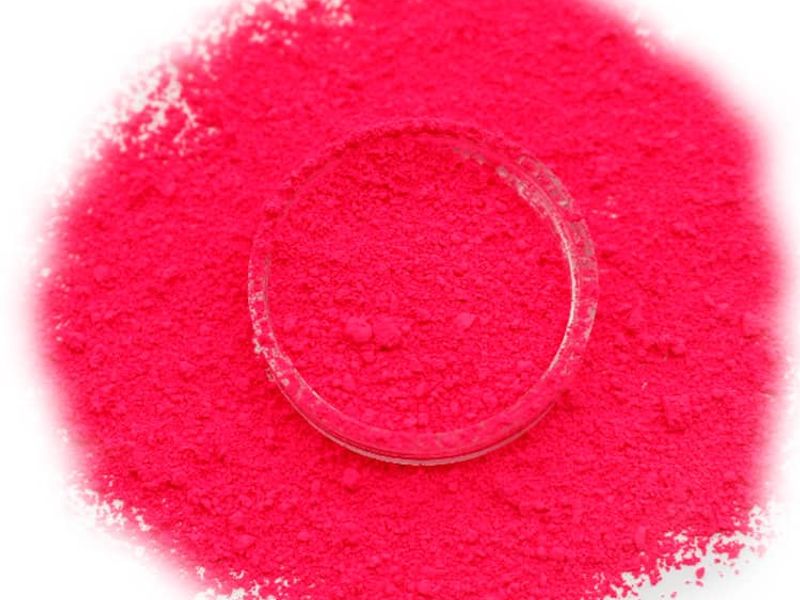
KT-FDS426 is a Bright Red daylight fluorescent pigment in the fine 1–5μm particle size range — a neon-grade organic pigment that converts absorbed light (including UV) into visible fluorescent emission, producing a red color with a luminance level that significantly exceeds conventional red pigments under daylight and UV-rich lighting conditions.
Read More
 English
 Français
 Deutsch
 Русский
 Español
 Português