
Leave A Message
If you are interested in our products and want to know more details,please leave a message here,we will reply you as soon as we can.
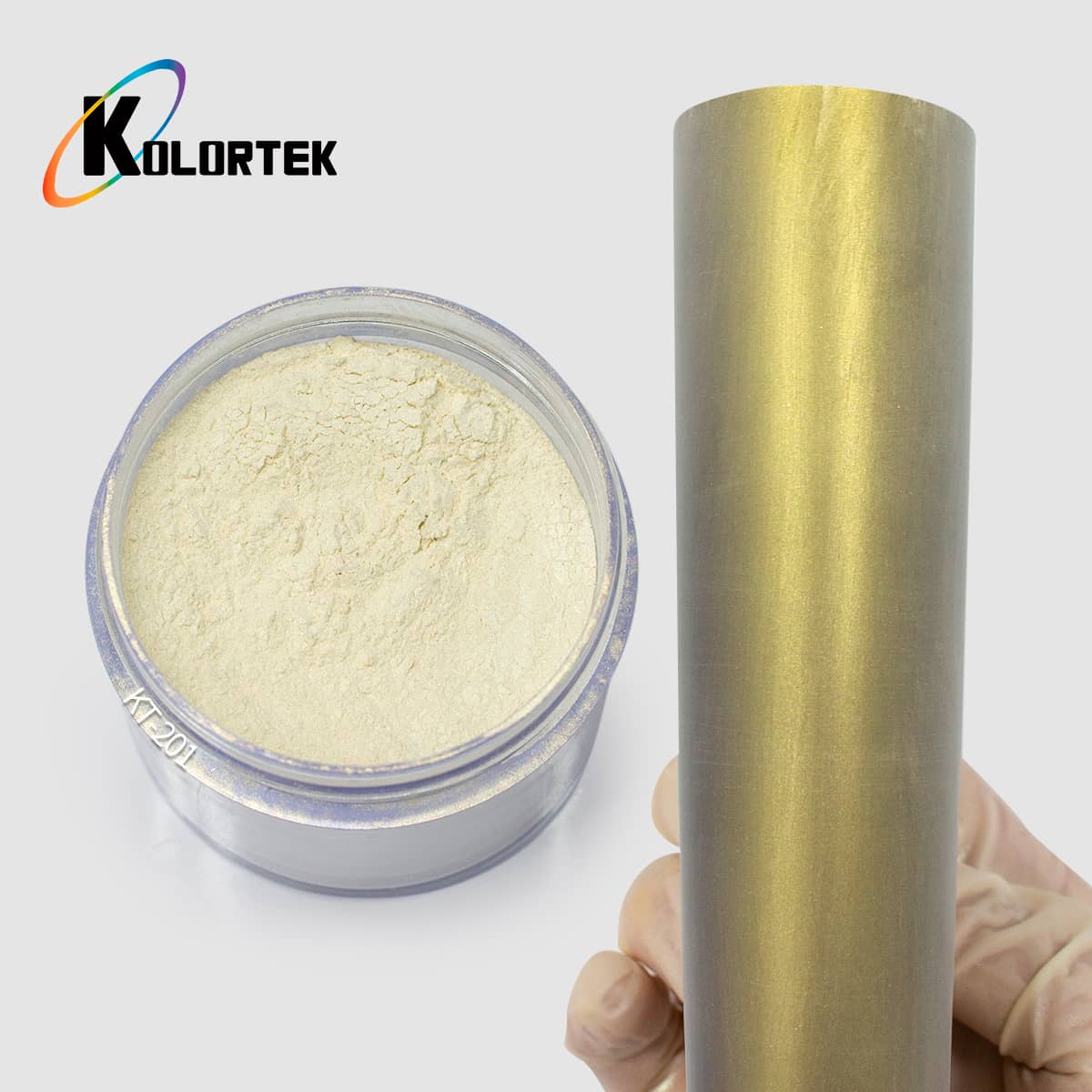
KT-201 Satin Gold Mica Pigment — Iriodin 201 Equivalent, Fine Particle
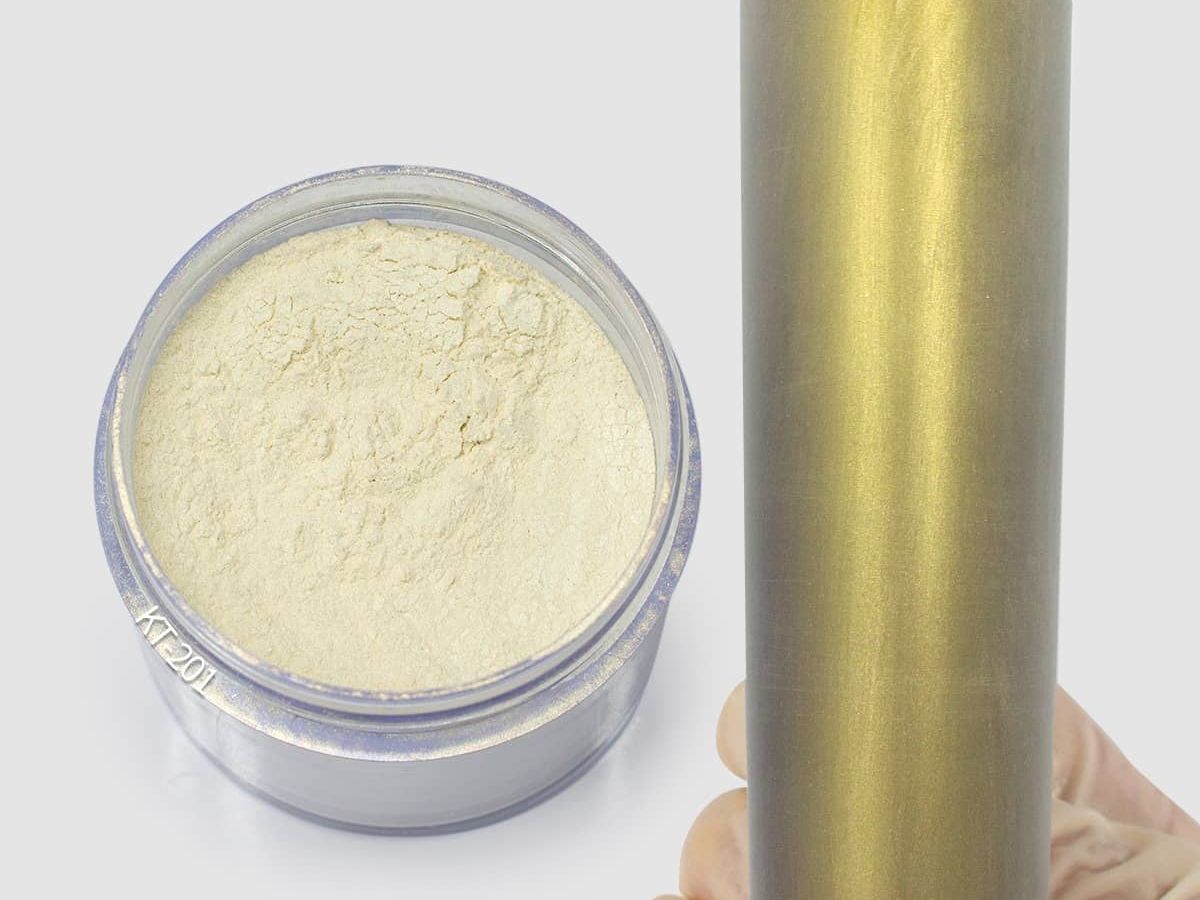
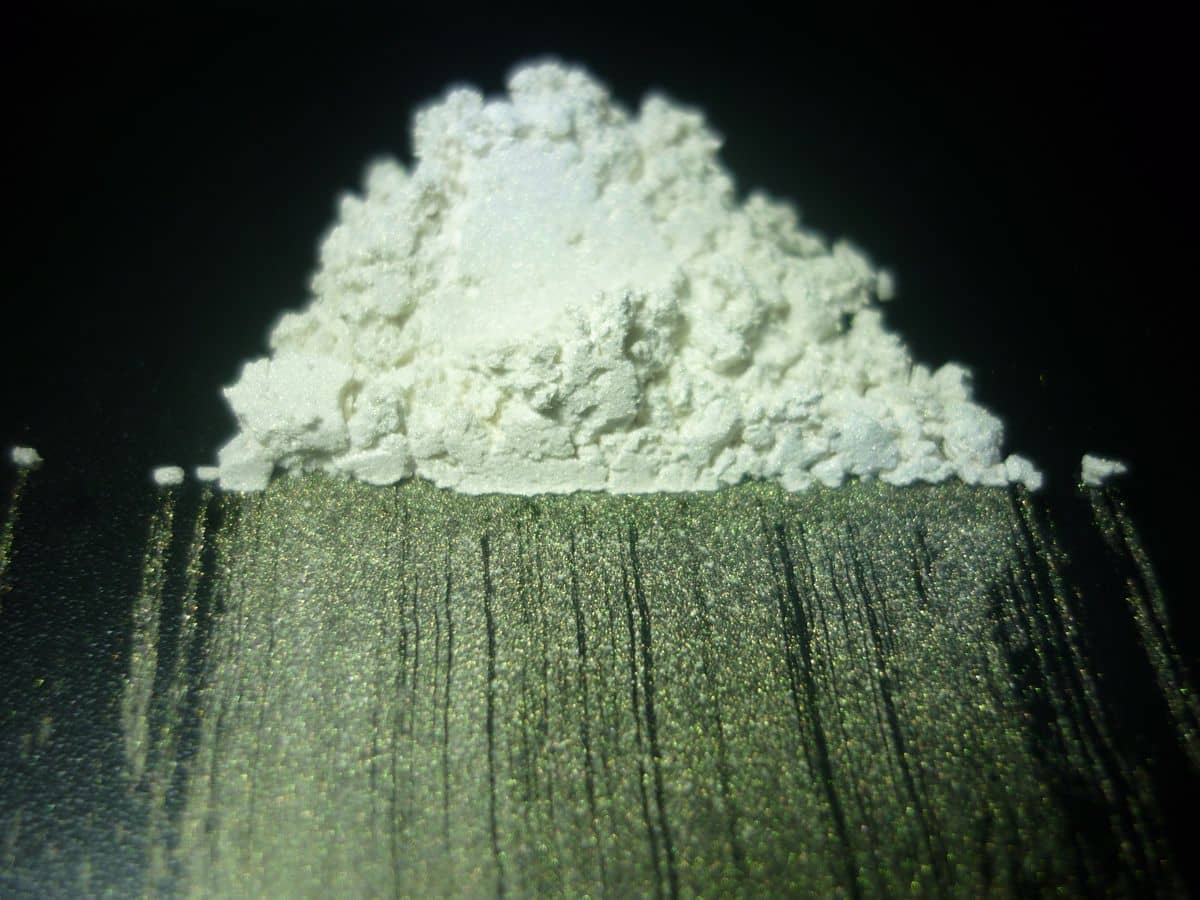
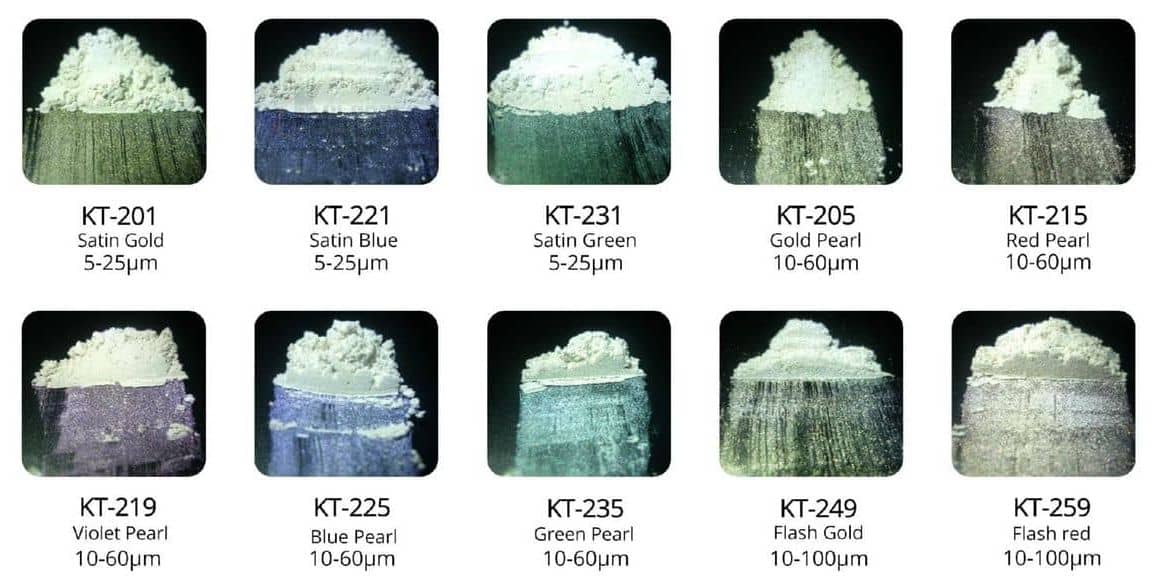
KT-201 is a fine-particle interference pigment built on natural mica with a TiO₂ + SnO₂ coating. Particle size sits in the 5–25 μm range, which positions it squarely in the satin-finish category — smooth, silky optical character, not glittery. The color mechanism is optical interference: the TiO₂ layer thickness is tuned to selectively reinforce gold-wavelength light while suppressing the complementary hues. The result is a soft, angular-dependent gold that reads differently depending on viewing angle and substrate color. This grade is a direct structural equivalent to Iriodin 201 Satin Gold — same mica substrate, same coating chemistry (TiO₂ + SnO₂), same particle size window. For formulators who need a drop-in merck mica pigments alternative without reformulating around a different particle size distribution or refractive index profile, KT-201 is the straightforward substitution.
Item No. :
KT-201Color Effect :
Satin GoldParticle Size :
5-25μmComposition :
Mica, Titanium Dioxide, Tin OxideBrand :
Kolortek / OEMMOQ :
25KGApplication :
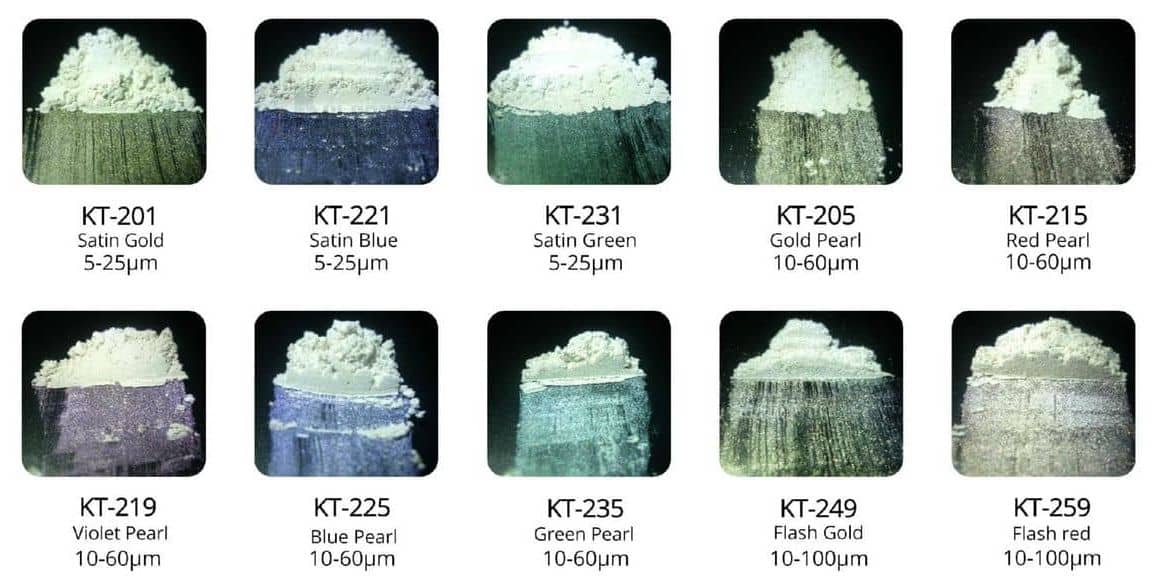
Paints & coatings, Printing inks (fine grades), Plastics, Cosmetics, Soap, Nail products, Craft materials, etc.The KT 200 series shares the same natural mica base as the KT 100 silver-white series, but carries a thicker titanium dioxide layer. That additional thickness shifts the pigments from neutral silver-white into selective interference territory — each grade tuned to a specific color band. KT-201 targets the gold band. If you need a broader look at the interference lineup, the table below covers the full range:
| Kolortek Code | Product Name | Particle Size | Iriodin Equivalent |
|---|---|---|---|
| KT-201 | Satin Gold | 5–25 μm | Iriodin 201 |
| KT-221 | Satin Blue | 5–25 μm | Iriodin 221 |
| KT-231 | Satin Green | 5–25 μm | Iriodin 231 |
| KT-205 | Gold Pearl | 10–60 μm | Iriodin 205 |
| KT-215 | Red Pearl | 10–60 μm | Iriodin 215 |
| KT-219 | Violet Pearl | 10–60 μm | Iriodin 219 |
| KT-225 | Blue Pearl | 10–60 μm | Iriodin 225 |
| KT-235 | Green Pearl | 10–60 μm | Iriodin 235 |
| KT-249 | Flash Gold | 10–100 μm | Iriodin 249 |
| KT-259 | Flash Red | 10–100 μm | Iriodin 259 |
The 7000-sub series (KT-7211 through KT-7275) extends the interference range further with shimmer, sparkle, and super-sparkle particle grades. These are distinct from KT-201 in visual character — coarser, more reflective, less suitable for fine printing or cosmetic applications where smoothness matters.
The 5–25 μm particle range is what makes KT-201 useful across a broader application set than coarser interference grades. Fine enough for gravure and flexo printing. Smooth enough for cosmetic formulations — eyeshadow, highlighter, nail products — where texture on skin or under tactile scrutiny matters. Also used in decorative coatings, craft applications, and soap.
In practice, if you're running an offset or high-resolution gravure job and need gold interference with minimal mottle, KT-201's fine cut is preferable to the 10–60 μm grades. The trade-off is lower sparkle intensity — you get satin, not flash.
Interference pigments like KT-201 are substrate-sensitive in a way that absorption pigments simply are not. The gold effect is produced by selective light reinforcement — at the reflection angle you see gold, but the transmitted or scattered light carries the complementary hue (in this case, blue-violet tones). On a white or neutral substrate, this produces a clean gold. On a dark substrate, the interference color can deepen and intensify. On a blue or violet base, the effect tends to cancel out, leaving a muted or muddy result.
This is not a defect — it's intrinsic to how interference works. But it's a formulation variable that has to be controlled deliberately. Matching the base material color phase to the interference hue rather than opposing it is the correct approach.
Worth noting: opacity of the matrix also plays a role. In highly opaque or filled systems, the interference effect is partially suppressed because the pigment platelets can't orient properly and the transmitted-light component is absorbed before it contributes to the visual effect. Lower-viscosity, higher-transparency systems generally give cleaner interference results.
KT-201 disperses readily in most common vehicle systems — solvent-borne, water-borne, and UV-cure. The fine particle size means it wets out quickly, but shear sensitivity is still a consideration. High-shear mixing breaks platelet geometry, which directly degrades the optical output. Low-shear or post-addition incorporation is the standard approach.
For cosmetic applications, dry blending into pressed powders or incorporation into anhydrous systems follows the same low-shear principle. In nail lacquers, settling can be an issue at fine particle sizes — rheology modifiers are typically required to maintain suspension without affecting the final film appearance.
Kolortek's interference series was designed to provide technically comparable iriodin effect equivalents across the full Iriodin 200-series lineup. KT-201 specifically mirrors Iriodin 201 in substrate (natural mica), coating (TiO₂ + SnO₂), and particle size (5–25 μm). For most coating, printing, and cosmetic applications, no formulation adjustment is needed during substitution.
That said, batch-to-batch particle size distribution and surface treatment details can vary between manufacturers. If your application is toleranced tightly on chroma or gloss angle, running a side-by-side drawdown before full production switchover is the right call.
Q: Is KT-201 a direct drop-in for Iriodin 201 in cosmetic formulations?
A: Compositionally yes — same mica substrate, TiO₂ + SnO₂ coating, and 5–25 μm particle range. For cosmetic use, you'd still want to confirm it against your internal color standards and any regional regulatory requirements for the specific application. The pigment chemistry is equivalent, but cosmetic sign-off involves more than chemistry.
Q: Why does the gold effect look weak or dull in my formulation?
A: Most commonly, it's a substrate color conflict. If your base material contains blue or violet pigmentation, it absorbs the interference color and suppresses the gold. The second likely cause is excessive shear during dispersion, which reduces platelet size and disrupts the optical layer uniformity. Check both before adjusting loading level.
Q: What's the difference between KT-201 (Satin Gold) and KT-205 (Gold Pearl) or KT-249 (Flash Gold)?
A: Particle size is the primary difference. KT-201 at 5–25 μm gives a smooth, satin finish — low sparkle, fine texture. KT-205 at 10–60 μm produces a more visible pearl with moderate sparkle. KT-249 at 10–100 μm is the high-sparkle, flash-finish option. All three are gold-interference grades on the same TiO₂ + SnO₂ / mica chemistry. The choice depends on the visual output and the application process constraints.
Q: Can KT-201 be used as an iriodin alternative in solvent-based industrial coatings?
A: Yes. The mica / TiO₂ + SnO₂ construction is chemically stable across most solvent systems — aromatics, esters, ketones, aliphatics. Compatibility with reactive systems (epoxy, polyurethane) is generally good, though cure chemistry occasionally affects surface orientation of the platelets. Run a compatibility check if you're working with heavily crosslinked systems at elevated cure temperatures.
If you're evaluating KT-201 as a merck iriodin pigments alternative for an existing formulation or a new development, samples and technical data sheets are available on request. For application-specific questions or larger volume inquiries, reach out directly at contact@kolortek.com.
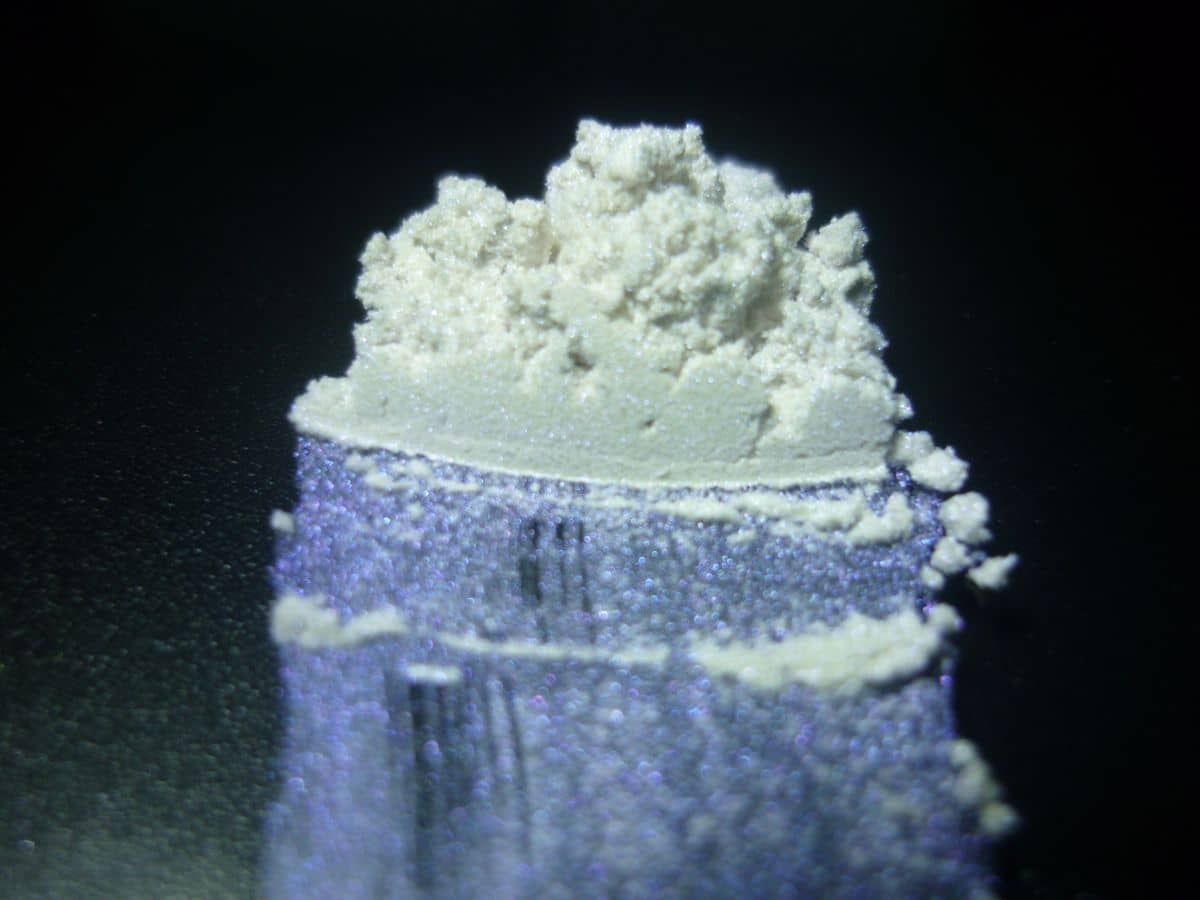
Kolortek Interference Series pigments are engineered to produce distinct iridescent colors through the precision control of light interference. Unlike standard silver-white pearls, these pigments utilize a thicker layer of Titanium Dioxide to selectively reflect specific wavelengths—resulting in vibrant Gold, Red, Violet, Blue, and Green highlights. Available in both natural mica (KT-200) and synthetic fluorphlogopite (KT-7200) substrates, they offer high-performance color-shifting effects for premium industrial and cosmetic applications.
Read More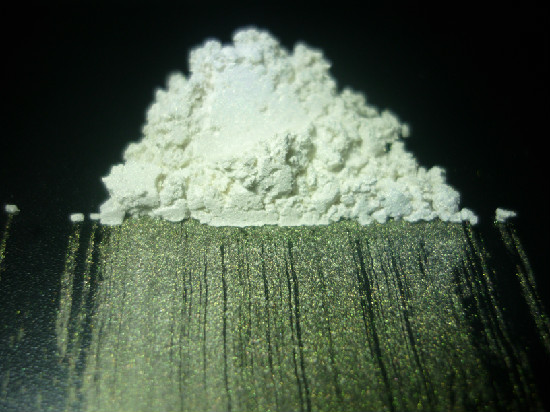
KT-201 is a satin gold interference mica pigment in the fine 5–25μm particle size range — a natural mica grade from the KT-200 Interference Series with a thicker rutile TiO₂ coating than standard silver white grades, tuned to produce a gold interference color through selective light interference. At this particle size, the effect reads as a smooth, satin-character gold luster suitable for printing inks, fine cosmetics, and coating applications where a soft, even gold pearl finish is required. The gold interference color appears distinctly on dark or transparent substrates; on white or complementary-colored bases, the effect is significantly diminished — a substrate dependency that formulators must account for during development.
Read More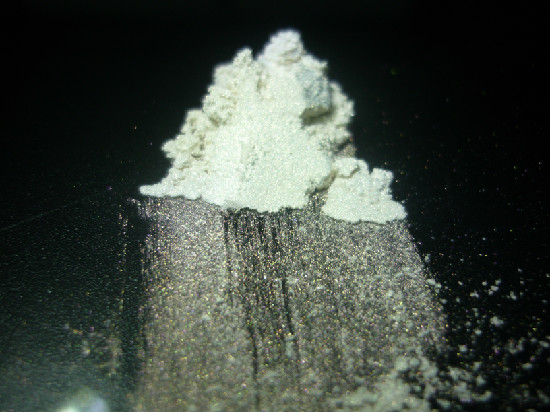
KT-215 is a red pearl interference mica pigment from the KT-200 Interference Series — a natural mica grade with a medium-layer rutile TiO₂ coating that selectively reflects red-phase wavelengths through thin-film interference. The powder appears white in bulk form; the red pearl color becomes visible when applied over dark or transparent substrates. For cosmetics, nail lacquer, decorative coatings, and printing inks where a clean red iridescent pearl is the target effect, KT-215 delivers consistent interference color determined by coating thickness rather than dye or pigment chemistry — which means the color does not fade or bleed over time in the same way organic colorants do.
Read More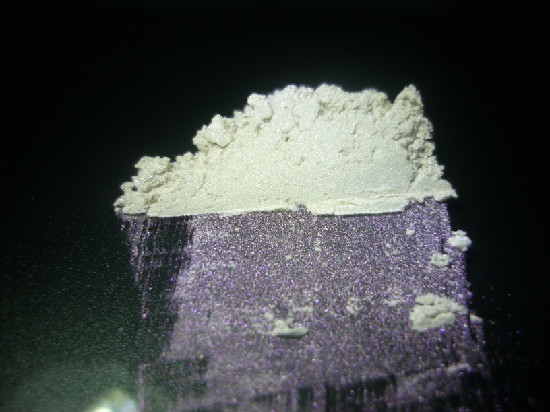
KT-219 produces a violet interference pearl effect on dark and transparent substrates — a medium-to-thick rutile TiO₂-coated natural mica grade that selectively reflects violet-phase wavelengths through thin-film interference. At 10–60μm, the particle size sits in the balanced range: fine enough for smooth film formation in coatings, cosmetics, and nail lacquer, coarse enough to deliver a perceptible pearl shimmer rather than a flat satin sheen. The violet interference color is substrate-dependent — it will not perform as expected over white, yellow-green, or complementary-colored bases, which is the primary formulation decision buyers need to resolve before specifying this grade.
Read More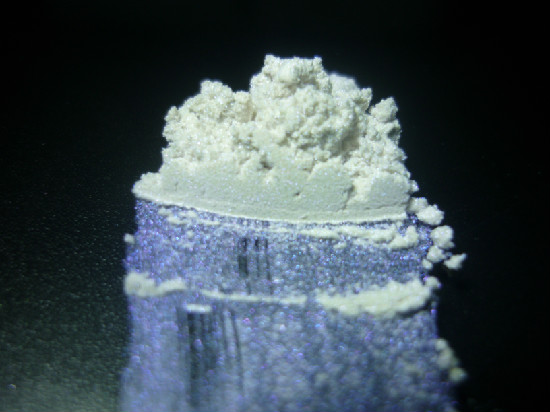
KT-225 is a blue pearl interference mica pigment from the KT-200 Interference Series — a thick-layer rutile TiO₂-coated natural mica grade that selectively reflects blue-phase wavelengths through thin-film optical interference. Applied over dark or transparent substrates, it delivers a clean, saturated blue pearl effect without the use of dyes or blue colorants. The interference mechanism is substrate-dependent: base color selection is the primary formulation decision before specifying this grade, and pairing with complementary-colored (orange-yellow) bases will suppress the blue and produce an unsatisfactory result.
Read More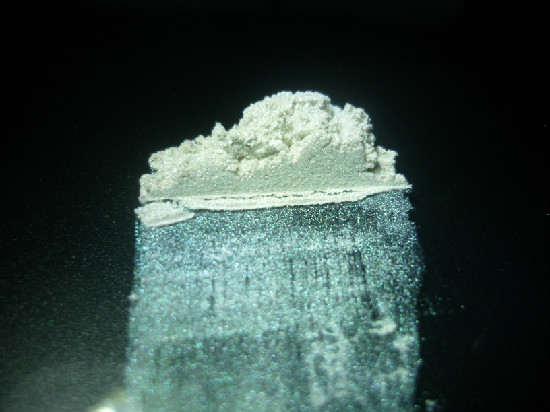
KT-235 is a green pearl interference pigment from the KT-200 natural mica Interference Series — the thickest TiO₂ coating grade in the standard interference color range, tuned to reflect green-phase wavelengths through selective thin-film interference. Like all KT-200 interference pigments, the powder appears off-white in bulk; the green pearl color becomes visible only over dark, black, or transparent substrates. For cosmetic formulators, coating developers, and craft suppliers working with substrates where base color can be controlled, KT-235 provides a clean, dye-free green iridescent pearl that is stable over time and compatible with standard binder systems.
Read More
KT-201 is a fine-particle interference pigment built on natural mica with a TiO₂ + SnO₂ coating. Particle size sits in the 5–25 μm range, which positions it squarely in the satin-finish category — smooth, silky optical character, not glittery. The color mechanism is optical interference: the TiO₂ layer thickness is tuned to selectively reinforce gold-wavelength light while suppressing the complementary hues. The result is a soft, angular-dependent gold that reads differently depending on viewing angle and substrate color. This grade is a direct structural equivalent to Iriodin 201 Satin Gold — same mica substrate, same coating chemistry (TiO₂ + SnO₂), same particle size window. For formulators who need a drop-in merck mica pigments alternative without reformulating around a different particle size distribution or refractive index profile, KT-201 is the straightforward substitution.
Read More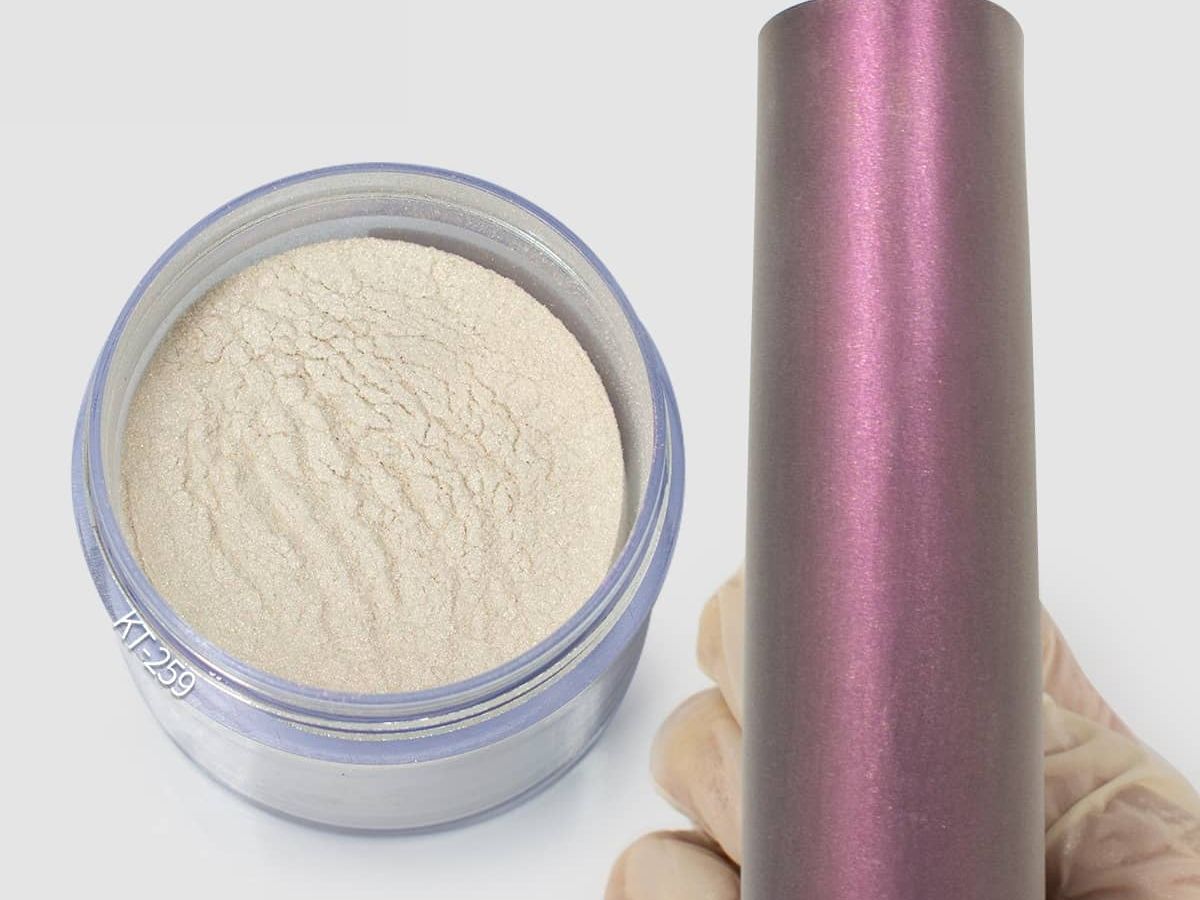
KT-259 is a natural mica-based interference pigment delivering a vivid flash red pearlescent effect — appearing white on neutral surfaces while revealing strong red on dark substrates. As a direct iriodin 259 alternative, it's formulated for coatings, nail polish, and cosmetic applications where clean interference color and reliable batch consistency are non-negotiable. The dual-color optical behavior makes it especially effective in automotive coatings, decorative paints, and effect ink systems.
Read More
 English
 Français
 Deutsch
 Русский
 Español
 Português