Leave A Message
If you are interested in our products and want to know more details,please leave a message here,we will reply you as soon as we can.
Green Pearl Interference Pigment, Natural Mica – KT-235
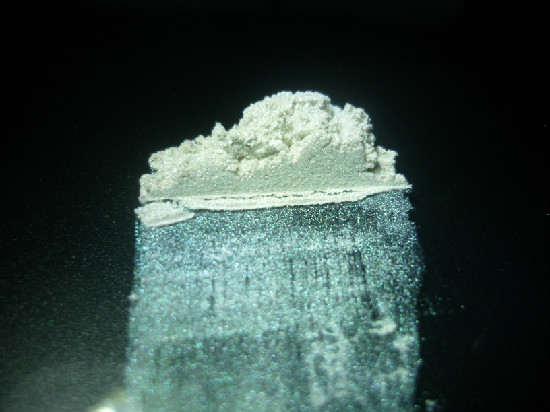
KT-235 is a green pearl interference pigment from the KT-200 natural mica Interference Series — the thickest TiO₂ coating grade in the standard interference color range, tuned to reflect green-phase wavelengths through selective thin-film interference. Like all KT-200 interference pigments, the powder appears off-white in bulk; the green pearl color becomes visible only over dark, black, or transparent substrates. For cosmetic formulators, coating developers, and craft suppliers working with substrates where base color can be controlled, KT-235 provides a clean, dye-free green iridescent pearl that is stable over time and compatible with standard binder systems.
Item No. :
KT-235Color Effect :
Green PearlParticle Size :
10-60μmComposition :
Mica, Titanium Dioxide, Tin OxideBrand :
Kolortek / OEMMOQ :
25KGApplication :
Paints & coatings, Printing inks (fine grades), Plastics, Cosmetics, Soap, Nail products, Craft materials, etc.
KT-235 is a green pearl interference pigment from the KT-200 natural mica Interference Series — the thickest TiO₂ coating grade in the standard interference color range, tuned to reflect green-phase wavelengths through selective thin-film interference. Like all KT-200 interference pigments, the powder appears off-white in bulk; the green pearl color becomes visible only over dark, black, or transparent substrates. For cosmetic formulators, coating developers, and craft suppliers working with substrates where base color can be controlled, KT-235 provides a clean, dye-free green iridescent pearl that is stable over time and compatible with standard binder systems.
Within the KT-200 Interference Series, green pearl occupies the highest TiO₂ coating thickness position — thicker than gold, red, violet, and blue interference grades. Each increment in coating thickness shifts the constructive interference peak toward longer wavelengths across the visible spectrum: gold → red → violet → blue → green. KT-235 sits at the green end of this progression. The complementary color suppressed by the green interference is red-pink — the primary formulation constraint that determines which bases are compatible and which must be avoided.
KT-235 is a standard interference pigment, not a chameleon or goniochromatic grade. The green pearl reads consistently at all viewing angles on dark substrates — it does not shift to another color as the angle changes. Angle-dependent color travel requires Kolortek's chameleon interference series, which uses a different coating architecture.
The thick rutile TiO₂ coating creates an optical path that reflects green-wavelength light constructively. The complementary color — red-pink — is simultaneously suppressed. On a dark substrate, the red-pink wavelengths are absorbed into the base, leaving a clean green interference pearl. On a white or light substrate, all wavelengths reflect freely and the green color is masked. On a red, pink, or magenta base, the complementary conflict produces a flat, desaturated result regardless of loading level.
| Base / Substrate Color | Expected Result | Recommendation |
|---|---|---|
| Black / dark | Saturated green interference pearl | ✓ Optimal |
| Transparent / clear | Green visible against dark backing behind the medium | ✓ Good |
| Dark green / forest green | Same-phase reinforcement — enhanced green intensity | ✓ Amplifying |
| White / light grey | Interference color masked — weak or colorless sheen | ✗ Avoid |
| Red / pink / magenta | Complementary conflict — flat, dull result | ✗ Avoid |
| Dark teal / dark blue-green | Adjacent phase — partial reinforcement; bench test recommended | Conditional |
| Parameter | Value / Notes |
|---|---|
| Item No. | KT-235 |
| Series | KT-200 Interference Series (Natural Mica) |
| Interference Color | Green Pearl |
| Effect Type | Standard interference — single green color at all viewing angles; no color shift |
| Substrate | Natural mica (muscovite) platelet |
| Coating | Thickest-layer rutile TiO₂ in standard interference range + Tin Oxide (SnO₂) |
| Composition | Mica, Titanium Dioxide, Tin Oxide |
| Particle Size | Multiple grades available — contact us for D50/D90 data |
| Appearance (powder) | Off-white powder — green pearl color visible on dark or transparent substrate only |
| Optimal Base | Black, dark, transparent, or green-phase base — avoid red / pink / magenta base |
| Complementary Color (suppress) | Red-pink |
| Color Travel | None — standard interference; not chameleon |
| Binder Compatibility | Water-based, solvent-based, UV-curable, wax, oil, epoxy resin |
| Synthetic Mica Alternative | KT-7200 series (Fluorphlogopite) — higher purity, fewer black spots, heat stability above ~500°C |
| Documentation | TDS, SDS on request; INCI available for cosmetic applications |
| Brand | Kolortek |
Green occupies the highest TiO₂ coating thickness in the standard interference series: The relationship between coating thickness and interference color follows a fixed optical progression across the KT-200 range. Green is generated by the thickest TiO₂ layer — which means it also has the most complex interference behavior and is the most sensitive to deviations in coating uniformity. Batch-to-batch TiO₂ thickness consistency is the manufacturing parameter that determines how reproducible the green interference color is across production lots.
Dye-free green color — stability advantage over organic colorants: The green pearl of KT-235 is generated entirely by TiO₂ coating physics, not by organic green dyes or colorants. Organic green dyes are among the least lightfast categories of cosmetic and coating colorants — they tend to fade or yellow with UV exposure. KT-235's interference color is inherently more stable under UV because the TiO₂ coating layer is the optical active element, not an organic chromophore.
Fine grades for printing ink and airbrush applications: For printing ink, flexo, and airbrush applications, confirm the D90 particle size from the TDS against your nozzle or screen specification before ordering. Fine grades with D90 below 25μm are required for most gravure and flexo press configurations. Coarser grades deliver stronger individual-flake sparkle for brush-applied coatings, nail lacquer, and resin art where smooth film formation is not a constraint.
| Application | How KT-235 Contributes | Notes |
|---|---|---|
| Nail lacquer | Green interference pearl in standard, gel, and builder formulations | Dark or black base coat for maximum green saturation; nude or bare nail reduces effect visibility |
| Cosmetics | Green iridescence in eye shadow, pressed powder, highlighter, body shimmer | Dye-free green — better lightfastness than organic green colorants; INCI docs available |
| Decorative coatings | Green pearl in wall finishes, furniture coatings, architectural and automotive refinish | Apply over dark base coat; add at letdown stage after high-shear dispersion is complete |
| Printing inks | Green pearl in packaging, labels, security printing over dark substrates | Specify fine grade with D90 below 25μm for gravure/flexo — confirm against press nozzle tolerance |
| Craft resin & resin art | Green pearl in clear resin castings and decorative panels | Transparent resin over dark backing or mold — full interference color visible without additional base coat |
| Soap making | Green interference shimmer in translucent and dark soap bases | Effect limited in white opaque soap; translucent or dark base required |
Mixing protocol: Add KT-235 at the letdown stage after all high-shear dispersion steps are complete. Use low-shear paddle or anchor mixing. Mechanical fracture of mica platelets from high-speed dispersers or tight-clearance pumps reduces D50 and degrades interference color saturation — the green becomes less chromatic and the pearl character flattens. For brush-applied coatings and resin art, this sensitivity is moderate; for fine-grade printing ink, it is more critical.
Confirm base color before development scale-up: Apply KT-235 over a black drawdown card before committing to any base color in your formulation. If the green interference color is not visible and saturated on black, the grade, loading level, or application method needs adjustment before evaluating on your actual substrate.
Kolortek has produced the KT-200 Interference Series for over 20 years with controlled TiO₂ coating thickness uniformity across batches — the parameter that most directly determines green interference color accuracy. TDS, SDS, and INCI documentation are available on request for KT-235 and all grades in the series. Custom particle size grades are available for volume buyers with specific application requirements.
Q: Why is green the most difficult interference color to achieve consistently in manufacturing?
A: Green requires the thickest TiO₂ coating in the standard interference progression — and the relationship between coating thickness and interference wavelength is non-linear at the green end of the visible spectrum. Small deviations in coating thickness that would cause minimal color shift at the gold or red interference level produce more noticeable shifts at green. Consistent green interference color across production batches requires tighter coating process control than lower-thickness interference colors — which is why batch-to-batch consistency is the primary manufacturing quality criterion for this grade.
Q: Can KT-235 replace organic green pigments or dyes in cosmetic formulations?
A: Partially, with important differences. Organic green colorants — phthalo green, chrome oxide, chromium oxide hydrate — provide flat, opaque green body color on any substrate, including white. KT-235 provides a green interference pearl that only develops on dark or transparent substrates. In applications where the cosmetic is applied over skin (which has a flesh-pink tone, not dark), the green interference effect is partially suppressed by the skin's color. KT-235 is most effective in eye shadow and pressed powder applications where it is layered over a dark eyeshadow base, or where skin depth provides sufficient contrast. It is not a direct replacement for body-color green pigments.
Q: Is the green interference color of KT-235 the same as a holographic pigment's green?
A: No. Holographic pigments use diffraction gratings to produce a rainbow spectrum of colors across the surface, with colors appearing and disappearing depending on viewing angle and light source angle. KT-235 produces a single green interference color that reads consistently at all viewing angles on dark substrates — there is no rainbow spread and no angle-dependent color shift. Holographic effects and standard interference effects are mechanically distinct. If a rainbow spectrum or angle-dependent multi-color effect is required, Kolortek's holographic or chameleon pigment series is the appropriate specification.
Green interference pearl performance is substrate-dependent — evaluating KT-235 on a black drawdown card and your actual application substrate before specifying for production is the standard qualification step. Contact Kolortek to request a sample for application trials, download the TDS with particle size data, or discuss grade selection across the KT-200 Interference Series.
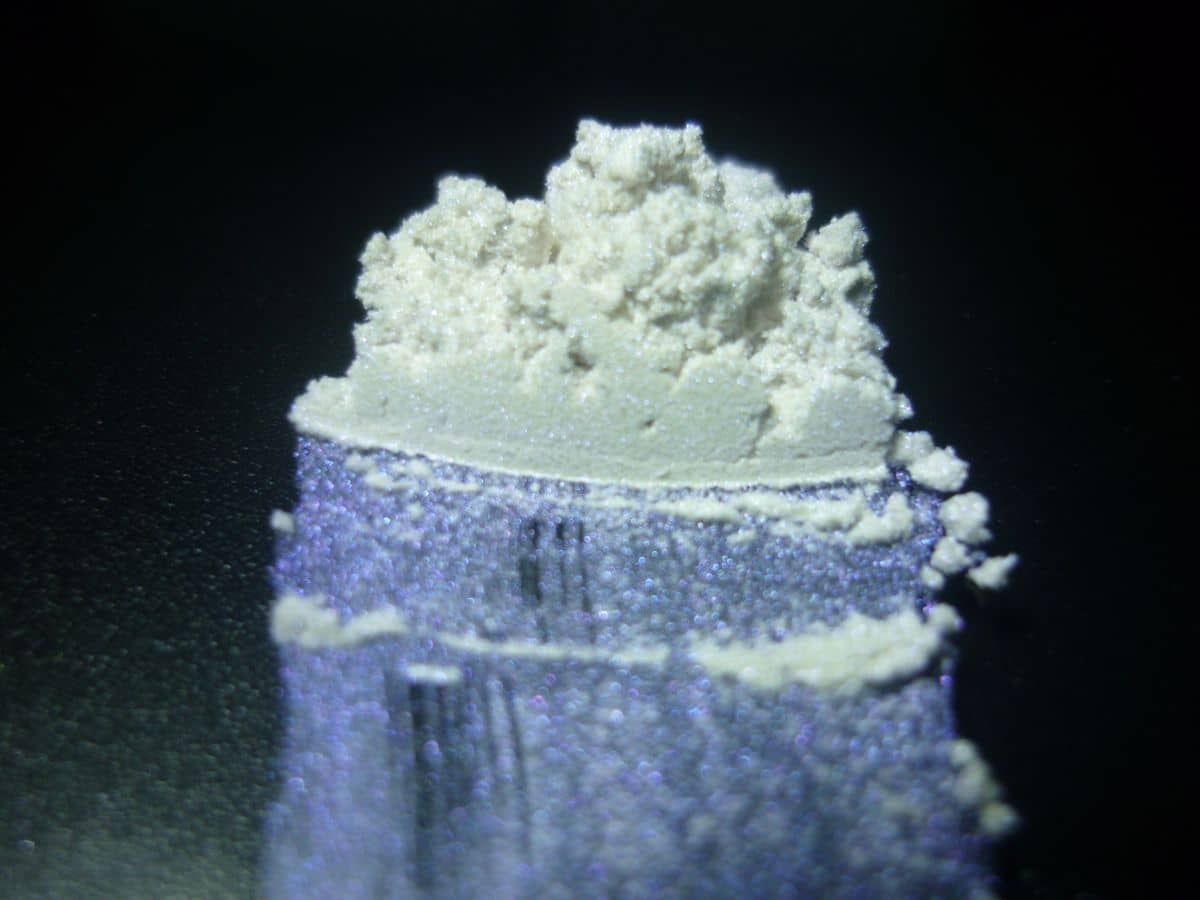
Kolortek Interference Series pigments are engineered to produce distinct iridescent colors through the precision control of light interference. Unlike standard silver-white pearls, these pigments utilize a thicker layer of Titanium Dioxide to selectively reflect specific wavelengths—resulting in vibrant Gold, Red, Violet, Blue, and Green highlights. Available in both natural mica (KT-200) and synthetic fluorphlogopite (KT-7200) substrates, they offer high-performance color-shifting effects for premium industrial and cosmetic applications.
Read More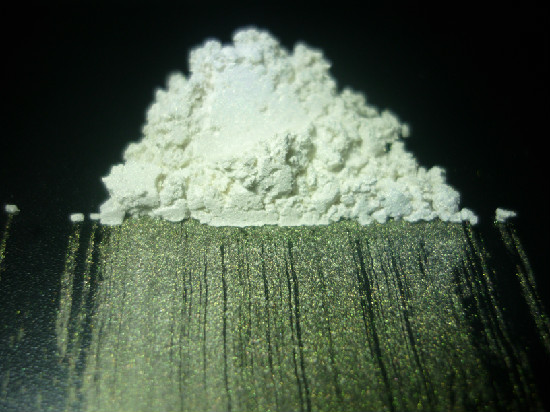
KT-201 is a satin gold interference mica pigment in the fine 5–25μm particle size range — a natural mica grade from the KT-200 Interference Series with a thicker rutile TiO₂ coating than standard silver white grades, tuned to produce a gold interference color through selective light interference. At this particle size, the effect reads as a smooth, satin-character gold luster suitable for printing inks, fine cosmetics, and coating applications where a soft, even gold pearl finish is required. The gold interference color appears distinctly on dark or transparent substrates; on white or complementary-colored bases, the effect is significantly diminished — a substrate dependency that formulators must account for during development.
Read More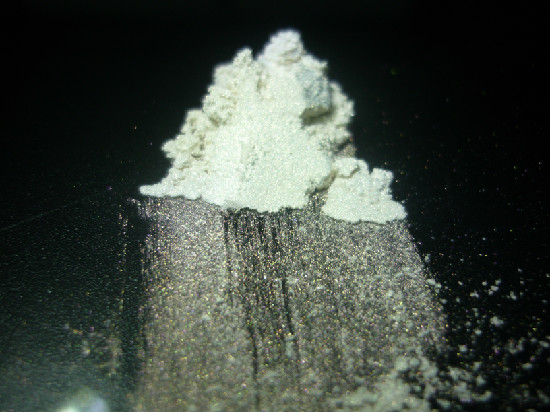
KT-215 is a red pearl interference mica pigment from the KT-200 Interference Series — a natural mica grade with a medium-layer rutile TiO₂ coating that selectively reflects red-phase wavelengths through thin-film interference. The powder appears white in bulk form; the red pearl color becomes visible when applied over dark or transparent substrates. For cosmetics, nail lacquer, decorative coatings, and printing inks where a clean red iridescent pearl is the target effect, KT-215 delivers consistent interference color determined by coating thickness rather than dye or pigment chemistry — which means the color does not fade or bleed over time in the same way organic colorants do.
Read More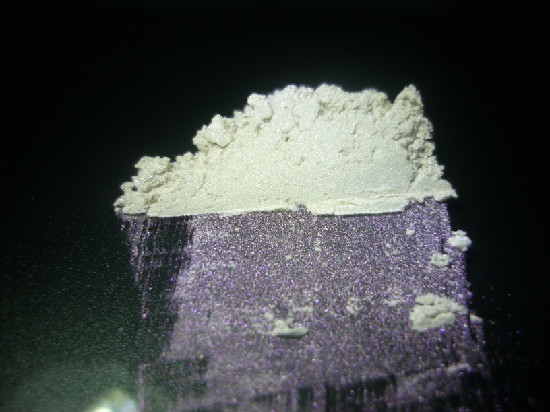
KT-219 produces a violet interference pearl effect on dark and transparent substrates — a medium-to-thick rutile TiO₂-coated natural mica grade that selectively reflects violet-phase wavelengths through thin-film interference. At 10–60μm, the particle size sits in the balanced range: fine enough for smooth film formation in coatings, cosmetics, and nail lacquer, coarse enough to deliver a perceptible pearl shimmer rather than a flat satin sheen. The violet interference color is substrate-dependent — it will not perform as expected over white, yellow-green, or complementary-colored bases, which is the primary formulation decision buyers need to resolve before specifying this grade.
Read More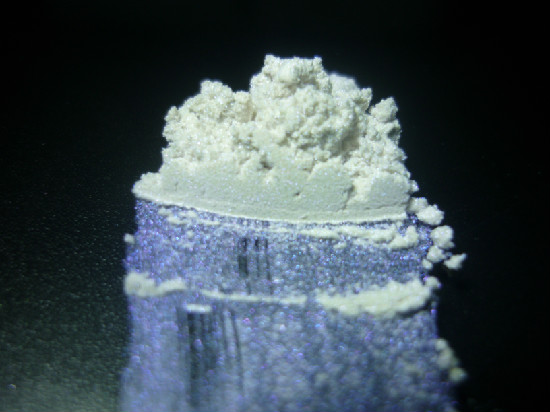
KT-225 is a blue pearl interference mica pigment from the KT-200 Interference Series — a thick-layer rutile TiO₂-coated natural mica grade that selectively reflects blue-phase wavelengths through thin-film optical interference. Applied over dark or transparent substrates, it delivers a clean, saturated blue pearl effect without the use of dyes or blue colorants. The interference mechanism is substrate-dependent: base color selection is the primary formulation decision before specifying this grade, and pairing with complementary-colored (orange-yellow) bases will suppress the blue and produce an unsatisfactory result.
Read More
KT-235 is a green pearl interference pigment from the KT-200 natural mica Interference Series — the thickest TiO₂ coating grade in the standard interference color range, tuned to reflect green-phase wavelengths through selective thin-film interference. Like all KT-200 interference pigments, the powder appears off-white in bulk; the green pearl color becomes visible only over dark, black, or transparent substrates. For cosmetic formulators, coating developers, and craft suppliers working with substrates where base color can be controlled, KT-235 provides a clean, dye-free green iridescent pearl that is stable over time and compatible with standard binder systems.
Read More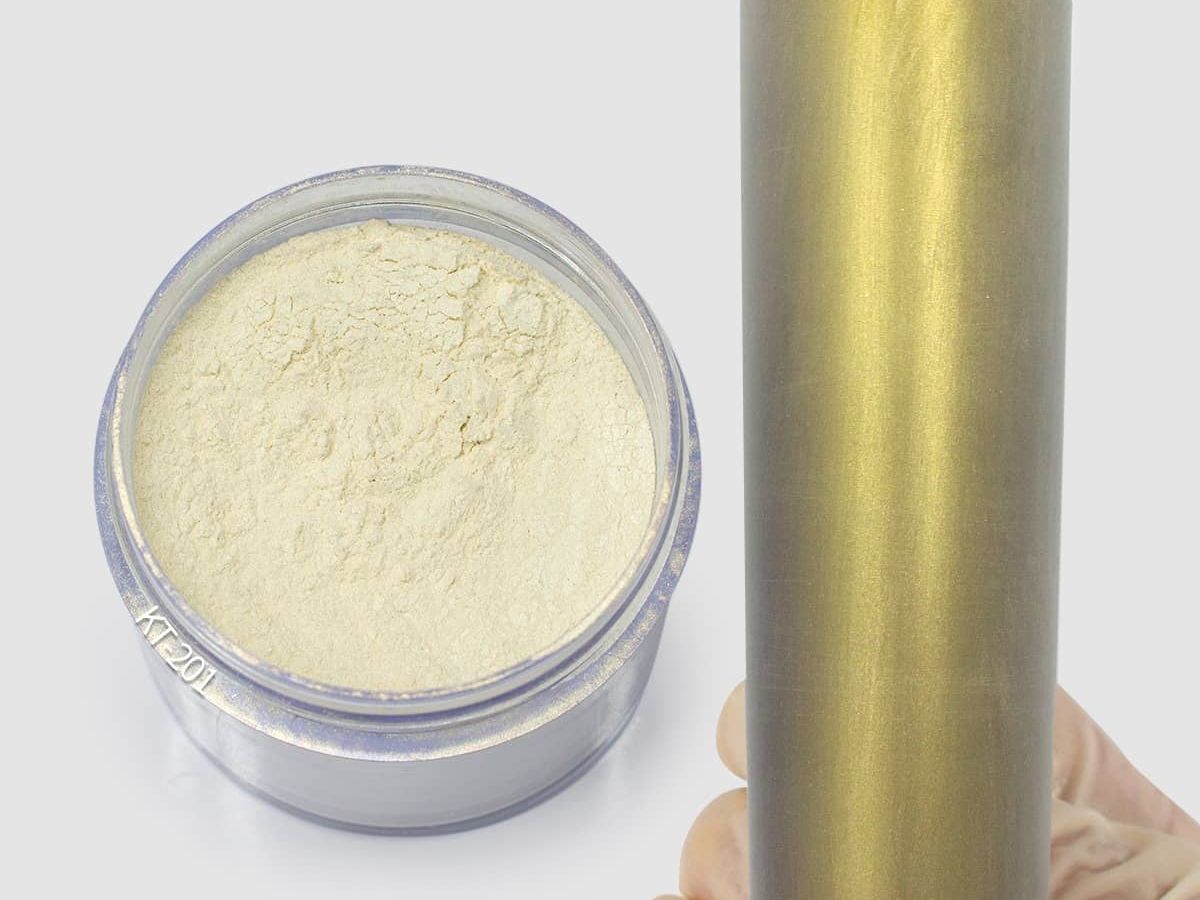
KT-201 is a fine-particle interference pigment built on natural mica with a TiO₂ + SnO₂ coating. Particle size sits in the 5–25 μm range, which positions it squarely in the satin-finish category — smooth, silky optical character, not glittery. The color mechanism is optical interference: the TiO₂ layer thickness is tuned to selectively reinforce gold-wavelength light while suppressing the complementary hues. The result is a soft, angular-dependent gold that reads differently depending on viewing angle and substrate color. This grade is a direct structural equivalent to Iriodin 201 Satin Gold — same mica substrate, same coating chemistry (TiO₂ + SnO₂), same particle size window. For formulators who need a drop-in merck mica pigments alternative without reformulating around a different particle size distribution or refractive index profile, KT-201 is the straightforward substitution.
Read More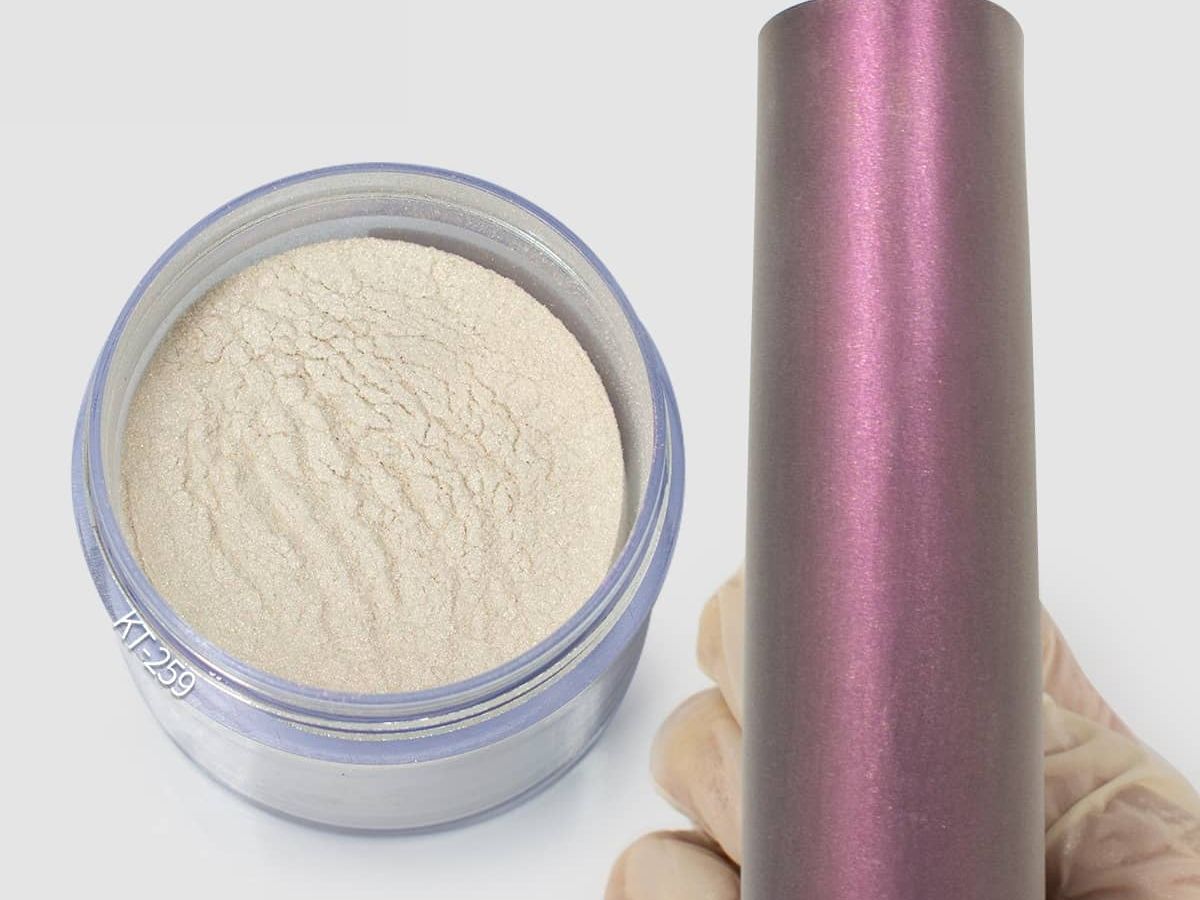
KT-259 is a natural mica-based interference pigment delivering a vivid flash red pearlescent effect — appearing white on neutral surfaces while revealing strong red on dark substrates. As a direct iriodin 259 alternative, it's formulated for coatings, nail polish, and cosmetic applications where clean interference color and reliable batch consistency are non-negotiable. The dual-color optical behavior makes it especially effective in automotive coatings, decorative paints, and effect ink systems.
Read More
 English
 Français
 Deutsch
 Русский
 Español
 Português