
Leave A Message
If you are interested in our products and want to know more details,please leave a message here,we will reply you as soon as we can.

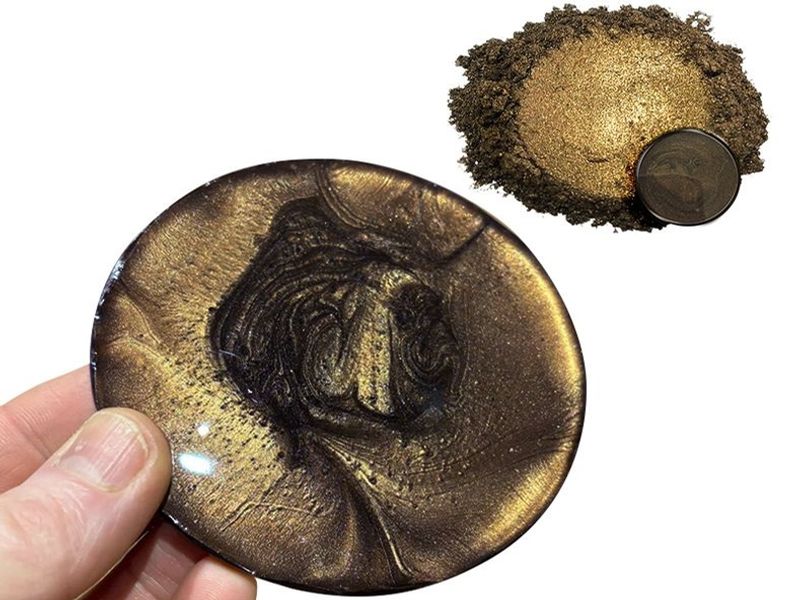
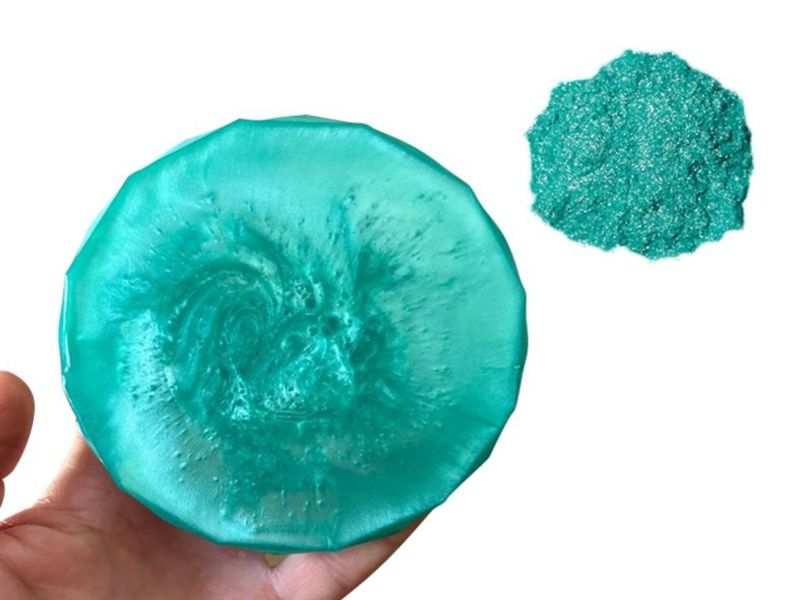
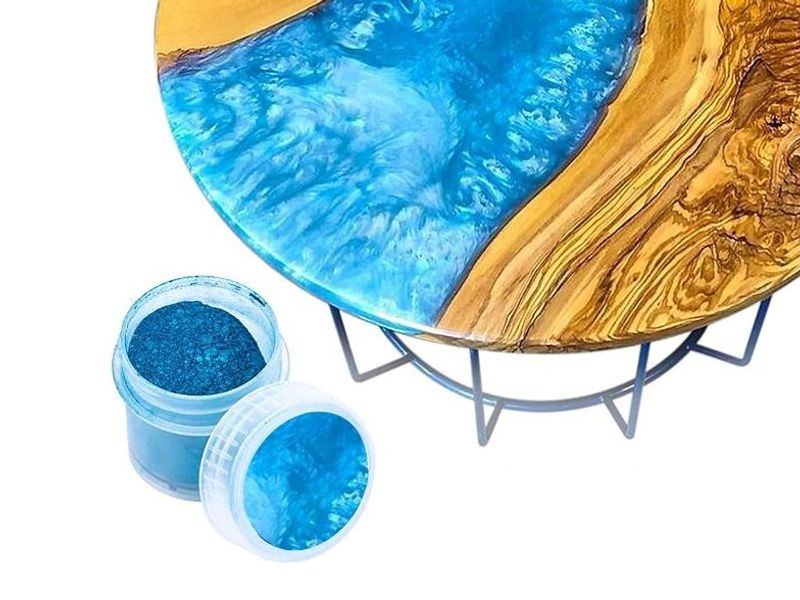
Selecting the right color pigment powder for epoxy resin determines whether a metallic floor, cast countertop, or decorative coating achieves a genuine visual effect or falls flat. Pearlescent, metallic, holographic, and color-shifting powders are the most widely used types — each delivering distinct shimmer, depth, or dynamic color behavior inside a cured epoxy matrix. From high-traffic metallic flooring to resin art and architectural surfaces, epoxy resin colour powder drives both the aesthetic and the functional finish.
The three dominant use cases for effect pigments in epoxy are: metallic decorative floors, cast countertops or artificial marble slabs, and specialty paints and coatings where standard solid colors are insufficient.
Metallic epoxy floors represent the most demanding environment — the pigment must survive abrasion, chemical exposure, and UV degradation while maintaining visual intensity. In this context, pigment selection isn't just aesthetic; it's a durability decision. Countertop and cast resin applications are more forgiving on wear but require excellent dispersion and, frequently, a layered build-up to achieve depth and three-dimensionality. Coatings applications are the most variable, often needing pigments that combine with other resin systems or require specific solvent compatibility.
Epoxy is a high-viscosity, optically clear or translucent matrix once cured — which means the pigment carries the full visual load. Unlike pigmented paints where a binder adds opacity, in epoxy the pigment is often suspended in depth. This creates opportunities for three-dimensional shimmer effects that flat coatings can't replicate.
Pearlescent mica flake pigments orient parallel to the substrate during curing, creating the characteristic layered shimmer. Gold bronze metallic powders scatter light more diffusely, producing a warmer, stronger metallic coverage. Holographic and chameleon pigments introduce angular color shifts — effects that are entirely substrate- and viewing-angle-dependent, meaning the dark base coat below the epoxy layer is not optional; it's structural to the effect.

The table below covers the main pigment categories used in epoxy applications, with their primary function and key practical notes:
| Pigment Type | Primary Effect | Typical Use | Key Note |
|---|---|---|---|
| Pearlescent (Silver White / Gold Series) | Shimmer, gloss, metallic luster | Floors, countertops, coatings | Orientation critical; avoid shear mixing |
| Metal Luster Series | Strong metallic concealment | Opaque metallic finishes | High hiding power; good for dark substrate coverage |
| Gold Bronze Powder | Warm gold/bronze metallic sheen | Decorative floors, coatings | Good oxidation and acid/alkali resistance |
| Chameleon / Chromashift | Angle-dependent color shift | Specialty coatings, art resin | Requires dark (preferably black) base for full effect |
| Holographic Pigment | Rainbow diffraction sparkle | Decorative resin, art applications | Particle fragility — avoid aggressive stirring |
| Fluorescent Pigment | High-chroma UV-reactive color | Art resin, visual signaling | Check UV and chemical resistance for flooring use |
| Glow in Dark Pigment | Luminescence after light exposure | Safety floors, decorative resin | Use with clear or near-clear epoxy base for best glow |
| Thermochromic Pigment | Heat-triggered color change | Interactive surfaces, art resin | Not suited for high-heat environments |
| Mica Flakes / Vinyl Flakes | Texture, visual depth | Broadcast floors, countertops | Applied by broadcast, not pre-mixed |
| Pigment Paste (Solvent-Based) | Opaque solid or metallic color | Epoxy coatings, direct mix | Pre-dispersed; simplifies formulation |
Durability in Floor Applications
For metallic epoxy flooring, gold bronze pigments offer measurable advantages: good oxidation resistance, wear resistance, and acid/alkali resistance under industrial conditions. Rutile-coated pearlescent pigments are the preferred choice when weather resistance matters — particularly in environments with UV exposure or humidity cycling. Where UV is a significant factor, formulating with UV absorbers alongside the pigment is recommended practice.
Settling and High Specific Gravity
Chromashift and similar high-density color-shifting pigments will settle in liquid epoxy — this is expected behavior, not a defect. The correct response is thorough agitation immediately before and during application, combined with anti-settling agents where shelf life in mixed state matters. Ignoring this leads to non-uniform distribution and a patchy final appearance.
Hiding Power and Substrate Interaction
Light-interference pearlescent pigments are not hiding pigments by nature — on dark substrates, applying them directly without a primer results in a muddy or suppressed effect. A light-colored primer coat underneath restores the intended shimmer. Alternatively, combining pearlescent powder with a small addition of fine-particle white or aluminum powder increases opacity without destroying the pearl effect. One limitation is that adding too much opaque material washes out the depth and translucency that makes pearlescent coatings valuable.
The most common formulation failure with epoxy color pigment powder in metallic floors and coatings is over-mixing. Pearlescent mica flakes and holographic particles are physically fragile — high-shear mixing breaks the platelets, directly reducing or eliminating the intended optical effect. Manual stirring or low-speed dispersers are sufficient. The goal is wet-out and distribution, not aggressive homogenization.
Pigment pastes (solvent-based) solve the dispersion challenge for formulators who need consistency. Because they're pre-dispersed, they blend into the epoxy system with simple mixing and produce predictable, repeatable color output. This is particularly relevant for production environments where operator variability in dry powder weighing and dispersion would otherwise introduce batch-to-batch inconsistency.
Orientation of pearlescent flakes during application affects the final gloss level. Applying thin coats in multiple passes — rather than a single thick pour — improves flake alignment parallel to the surface, which is what generates the mirror-like metallic appearance. Orientation and leveling agents can assist, but coating thickness management is the primary lever.
For color-shifting effects to read clearly, base coat color is not a secondary consideration. A black base coat produces the highest contrast and the widest perceived color-shift range for chameleon and chromashift pigments. Light or neutral bases significantly reduce the effect. If the substrate material is inherently light (e.g., white cast resin), increasing pigment concentration is the compensating measure — though this adds cost and may affect cure behavior at high loadings.
Dry powder pigments give formulators maximum flexibility — they can be used across water-based, solvent-based, or 100% solids epoxy systems, and dosage is easy to adjust. The trade-off is dispersion complexity: powders require proper wetting agents, careful mixing procedures, and more process control to achieve consistent results, especially for fine pearlescent particles.
Solvent-based pigment pastes are designed for direct mix-in with epoxy resins. They eliminate wetting and dispersion steps, deliver consistent opacity in opaque colors (metallic luster, matte, and pastel ranges), and work well for smaller batch production or applications where simplicity matters. That said, solvent content is a factor — check compatibility with the specific epoxy hardener system, particularly in low-VOC or 100%-solids epoxy formulations.
In practice, many floor coating applicators use a combination: a pigment paste for the solid base color and a dry pearl or metallic powder mixed in to add shimmer on top of that opaque foundation. This gives coverage control from the paste and visual depth from the powder.
Why does my pearlescent epoxy floor look dull after curing?
Several factors cause this: over-mixing that broke the mica flakes, applying too thick a coat that prevented flake orientation, using a dark substrate without a primer, or selecting a complementary color combination that cancels out the iridescent effect. Start by checking mixing method and coat thickness before adjusting pigment selection.
Can I mix different pigment types together in the same epoxy batch?
Yes, but with care. Pearlescent and metallic powders combine well to build layered shimmer. Fluorescent and pearl combinations are common in art resin. Avoid mixing opaque pigments with high-transparency interference pigments at high loadings — the opaque component will overwhelm and suppress the interference effect. Test at small scale before committing to a production batch.
Are solvent-based pigment pastes compatible with all epoxy hardener systems?
Not universally. Solvent-based pastes work well with standard two-component epoxy systems for flooring and coatings. In 100%-solids or low-VOC-compliant formulations, the solvent content may affect cure uniformity or regulatory compliance. Always request a TDS and conduct a compatibility check with your specific hardener before full-scale use.
What dosage level should I use for metallic epoxy floors?
Dosage varies by pigment type, particle size, and the opacity or effect required. For pearlescent powders in floor coatings, typical usage ranges from 2–8% by weight of the epoxy component — but this is highly application-specific. For color-shifting pigments where the base is light, higher loadings are needed. Suppliers should provide application-specific guidelines; request formulation data rather than relying on generic percentages.
Request Samples or Technical Support
If you're developing an epoxy floor system, countertop formulation, or specialty coating and need to evaluate specific pigment types — powder or paste — contact the Kolortek technical team directly. Sample requests, TDS, MSDS, and formulation guidance are available for qualified inquiries.
Email: contact@kolortek.com
Pearlescent pigment for resin is widely used in epoxy systems to create shimmer, metallic luster, and deep color-shift finishes across decorative surfaces. These dry powder and paste pigments integrate directly into epoxy formulations, delivering visual depth that standard colorants cannot achieve. From poured epoxy floors to cast countertops, pearl pigment for epoxy resin has become a standard choice wherever decorative resin work demands a polished, high-impact appearance.
Read More
Selecting the right color pigment powder for epoxy resin determines whether a metallic floor, cast countertop, or decorative coating achieves a genuine visual effect or falls flat. Pearlescent, metallic, holographic, and color-shifting powders are the most widely used types — each delivering distinct shimmer, depth, or dynamic color behavior inside a cured epoxy matrix. From high-traffic metallic flooring to resin art and architectural surfaces, epoxy resin colour powder drives both the aesthetic and the functional finish.
Read More
 English
 Français
 Deutsch
 Русский
 Español
 Português