
Leave A Message
If you are interested in our products and want to know more details,please leave a message here,we will reply you as soon as we can.

Color cosmetics rely on effect pigments to define product identity — the shimmer in an eyeshadow, the pearl depth in a lip gloss, the color-shift in a nail gel. As consumer demand moves toward more complex visual effects alongside growing scrutiny of ingredient safety, cosmetic formulators face the dual pressure of delivering differentiated aesthetics while maintaining compliance across fragmented regional regulations. Kolortek's cosmetic pigment range covers standard pearlescents through specialty effect pigments, with multi-market compliant grades and documentation support for EU, US, and Asian markets.
| Application Scenario | Recommended Product / Series | Key Reason for Recommendation |
|---|---|---|
| Pressed and loose eyeshadow — standard pearl | KT 100 Silver White / KT 300 Gold / KT 500 Metal Luster | Broad particle size range covers satin through sparkle finishes; natural and synthetic mica options for different purity requirements |
| Eyeshadow — vivid or multi-chrome color effects | Cosmetic Multicolors Series / Duochrome Chameleon Series / KT ChromaPlus | Multiple colorant systems available to match EU, US, and JP regulatory frameworks simultaneously; duochrome series adds color-travel dimension |
| Highlighter and face shimmer | DreamStar Borosilicate Series / KT Intense Chroma Metallic Silver | Borosilicate substrate produces higher refractive index and more defined point sparkle than mica — relevant for premium highlighter positioning |
| Lip products — pearl and shimmer | KT 100 / KT 300 / KT Matte Tonne / KT D&C Colors | Lip-safe colorant grades available; matte tonne series for non-sparkle lip formulations; D&C colors for US lip product colorant compliance |
| Nail gel — color-shift and special effects | Duochrome Chameleon Cat Eyes / KT Holographic Pigments / KT Glitter Series / KT Color Up Flakes | Magnetic cat eye, holographic, and color-shift grades cover current nail trend categories; flake grades for nail art texture effects |
| UV-reactive cosmetics / festival makeup | KT FC Series Fluorescent (formaldehyde-free) | FC series is formulated for face, eye, and lip use; formaldehyde-free system relevant for sensitive skin and EU compliance positioning |
| Glitter alternatives (microplastic-free) | DreamStar Borosilicate / KT Color Up Flakes / KT Holographic Multichrome | Mineral-based flake alternatives to PET glitter; relevant for brands repositioning away from synthetic plastic glitters under EU microplastic regulation |
| Skincare with shimmer (body lotion, primer) | SynStar Synthetic Mica Series / KT Aurora Powders | Synthetic mica provides higher purity and lower dark-spot count than natural mica — relevant for leave-on skin contact applications and clean beauty positioning |
| Color cosmetics requiring natural/clean positioning | SynStar Synthetic Mica / KT Metasilver Silvers / KT Matte Tonne | Synthetic mica and borosilicate substrates support ISO 16128 natural origin index calculations where relevant to brand claims |
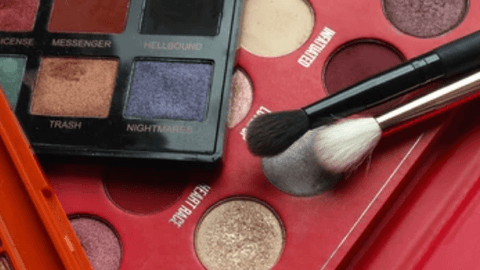
Particle Size Selection for Cosmetics
| Visual Target | Particle Size Range | Why |
|---|---|---|
| Smooth satin finish (foundation, BB cream, setting powder) | 5–25 µm | Fine grades blend invisibly into skin; no visible individual particle reflections; uniform coverage |
| Soft pearl shimmer (blush, eyeshadow mid-tone) | 10–60 µm | Standard cosmetic pearl range; balance of coverage and visible shimmer without coarse sparkle |
| Visible sparkle (eyeshadow highlight shade, lip gloss) | 20–100 µm | Individual platelet reflections visible; produces defined sparkle rather than diffuse shimmer |
| Strong sparkle / nail art (pressed eyeshadow topper, nail gel) | 40–200 µm | High visual impact; coarser grades require adequate binder system to adhere in pressed formats |
| Glitter effect / flake nail art (nail topcoat, body shimmer) | 100 µm–flake grades | Flake grades (Color Up Flakes, Holographic flakes) produce distinct individual reflections; used as toppers or accent elements |
Substrate Selection for Cosmetics
| Requirement | Natural Mica | Synthetic Mica (SynStar) | Borosilicate (DreamStar) | Other |
|---|---|---|---|---|
| Purity / dark spot count | Standard — minor natural inclusions present | High purity, minimal inclusions — preferred for premium and sensitive skin | High purity glass substrate | — |
| Luster intensity | Good | Higher than natural mica | Highest — glass refractive index exceeds mica | — |
| Sparkle character | Soft pearl to sparkle | Sharper pearl, cleaner reflection | Diamond-like, defined point sparkle | Holographic: diffraction-based rainbow |
| Regulatory profile | Widely listed across markets | Fluorophlogopite — listed in EU, US, JP cosmetic regulations | Calcium aluminum borosilicate — listed in EU and US | FD&C/D&C grades for US-specific requirements |
| Clean beauty / natural origin | Natural origin | Synthetic — check brand's natural origin policy | Synthetic — check brand policy | — |
| Cost sensitivity | Lower cost | Higher than natural mica | Higher than mica | Varies by effect series |
| Special effect capability | Standard pearl and color effects | Standard pearl and color effects | Diamond sparkle, borosilicate-specific | Holographic, thermochromic, photochromic, magnetic, fluorescent |
Pressed Eyeshadow — Duochrome Topper Shade Product used: Duochrome Chameleon Series Effect achieved: The pressed pan displays a color-shift from one hue to a complementary color as the viewing angle changes — producing a visually differentiated topper shade that reads differently in the pan, on the brush, and on the lid. Formulation note: Duochrome pigments show maximum color travel over a dark or black base; applying over a light or white base will reduce the visible shift. Pressed format requires adequate binder and pressing pressure evaluation to maintain platelet orientation.
Nail Gel — Holographic Chrome Effect Product used: KT Holographic Pigments / KT Color Up Flakes Effect achieved: A liquid silver metallic base with full-spectrum rainbow diffraction color movement visible across the nail surface under directional light — producing a holographic chrome finish. Formulation note: Holographic flakes require sufficient gel viscosity to maintain orientation during cure. Apply a chrome powder over a cured black gel base for maximum contrast and rainbow intensity. UV/LED cure time should be tested with the specific gel system.
Lip Gloss — Subtle Pearl with Color Product used: Cosmetic Multicolors Series (660000 or 655000 depending on target market) Effect achieved: Transparent pearl depth with a defined color contribution from the colorant layer — the lip gloss appears colored and luminous rather than opaque or flat. Formulation note: Confirm colorant regulatory status for lip use in each target market before finalizing grade selection. Fine grades (10–60 µm) recommended for lip gloss to avoid texture on application.
UV-Reactive Festival Face Paint Product used: KT FC Series Fluorescent (formaldehyde-free) Effect achieved: Vivid neon color in daylight that intensifies dramatically under UV/blacklight — relevant for festival, stage, and event makeup applications. Formulation note: FC series is positioned for face, eye, and lip use; formaldehyde-free formulation. Confirm compliance with target market cosmetic regulations for face paint or theatrical makeup category before use. Skin patch testing recommended for end consumer products.
Manufacturing Experience Kolortek has manufactured effect pigments for over 20 years. For cosmetic customers, this translates specifically into consistent colorant deposition and particle size distribution across production batches — the two variables that most directly affect shade matching and formula reproducibility between production runs. Both standard catalogue grades and custom color specifications are available.
Product Range Breadth The cosmetic pigment range covers standard silver-white and gold pearlescents, multi-market compliant colored pearl series, borosilicate diamond-sparkle grades, and specialty effect pigments including fluorescent, holographic, color-shift, and magnetic cat eye — across mica, synthetic mica, and borosilicate substrates. A formulator developing a full product line can source across all effect categories from one supplier, with consistent documentation standards across all grades.
Technical and Compliance Support Kolortek's technical team can provide INCI names, CAS numbers, and grade-specific TDS and SDS for all products. For multi-market regulatory questions — colorant listing status across EU, US, and other markets — the team is available to support grade selection discussions. Kolortek does not provide regulatory approval advice, but can supply the technical documentation that supports a brand's own compliance review process.
Cosmetic pigment requirements vary significantly by application category, target market, and brand positioning. Whether you are developing a standard pearl eyeshadow, a color-shift nail collection, or a clean-beauty compliant face shimmer, the appropriate grade depends on a combination of visual, formulation, and regulatory factors.
Sample sets by product category, grade-specific INCI and TDS documentation, and formulation consultation are available upon request.
FAQs
Q: What is the difference between natural mica and synthetic mica in cosmetic pigments?
Natural mica is mined and processed; it contains minor natural inclusions that can appear as dark spots in fine cosmetic applications. Synthetic mica (fluorophlogopite) is manufactured under controlled conditions, producing a higher-purity substrate with fewer inclusions, higher luster, and better consistency — making it preferred for premium color cosmetics and sensitive skin formulations. Both are listed in EU, US, and JP cosmetic regulations. Kolortek offers both as the KT-100 (natural) and SynStar (synthetic) series.
Q: Which Kolortek pigments are suitable for lip products in both the EU and the US?
Colorant approval for lip use differs between the EU (EC Annex IV) and the US (FDA D&C color additive listings), so not all grades are automatically dual-compliant. Kolortek's Cosmetic Multicolors series is available in multiple sub-series using different colorant systems — including grades formulated around inorganic oxides, carmine, and D&C colorants — to address different market requirements. Contact Kolortek's technical team with your target markets for grade-specific colorant compliance information.
Q: Can Kolortek's borosilicate pigments replace conventional PET glitter in cosmetic formulations?
Borosilicate glass flakes (DreamStar series) are being evaluated by many brands as alternatives to conventional PET glitter, particularly in the context of EU microplastic regulations. They are not a direct drop-in replacement — particle size, density, refractive index, and application behavior differ from PET glitter, and the visual effect is distinct rather than identical. However, they are mineral-based, insoluble, and can produce high-sparkle decorative effects suitable for many cosmetic applications. Samples are available for formulation trials.
Q: What particle size should I use for an eyeshadow shimmer versus a face highlighter?
For eyeshadow shimmer, 10–60 µm is the standard range — it produces visible pearl and shimmer without excessive coarseness. For a face highlighter where a more intense, defined sparkle is desired, 20–100 µm or borosilicate grades (DreamStar series) at 30–150 µm will produce higher visual impact on skin. For a satin or smooth-finish pressed powder with minimal sparkle, grades under 25 µm provide coverage without visible individual particle reflections.
Q: Does Kolortek provide INCI names and safety documentation for all cosmetic pigment grades?
Yes. INCI names, CAS numbers, TDS, and SDS are available for all cosmetic pigment grades upon request. For multi-market regulatory review, Kolortek can provide the ingredient documentation that supports a brand's or manufacturer's own compliance assessment process. Specific regulatory approval queries — such as colorant listing status in a particular market — should be confirmed with the relevant regulatory authority, but Kolortek's technical team can assist with grade selection discussions.

 English
 Français
 Deutsch
 Русский
 Español
 Português