Leave A Message
If you are interested in our products and want to know more details,please leave a message here,we will reply you as soon as we can.
Pressure to reduce or eliminate titanium dioxide (TiO₂) from cosmetic formulations has grown steadily over recent years. Regulatory scrutiny — particularly around ultrafine and nano-grade TiO₂ particles — combined with shifting consumer expectations around ingredient transparency, has led many formulators to actively evaluate replacement options. A March 2026 review published by SpecialChem (Titanium Dioxide-Free Alternatives for Cosmetics) reinforces what our own technical and sales teams have been observing in the market: demand for TiO₂-free solutions in cosmetic applications is no longer a niche request — it is becoming a standard specification requirement for a growing number of brands.
This update outlines the formulation challenges involved, the alternative material categories available, and how our current product range addresses these requirements.
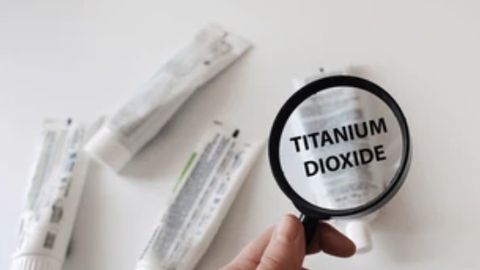
TiO₂ has historically served two primary functions in cosmetic formulations: opacity/whitening and UV protection. Its removal creates measurable performance gaps — particularly in foundations, face powders, and sunscreen-adjacent products — that must be addressed through reformulation rather than simple substitution.
The concerns driving its reduction fall into two categories:
Replacing TiO₂ is not straightforward. Formulators working through this transition typically need to address the following:
We have developed and supply a range of cosmetic-grade materials specifically positioned as TiO₂-free options. These fall into several functional categories:
Our Kolortek Pearls (Titanium Dioxide Free) series provides pearlescent and lustre effects without relying on TiO₂ coatings. These are designed for use in face powders, foundations, eyeshadows, blushers, and general decorative cosmetic applications. The series covers silver-white, interference, and multicolor optical effects, giving formulators flexibility to achieve aesthetic targets without the regulatory burden of TiO₂-containing ingredients.
Our Cosmetic Fillers & Treated Pigments range includes surface-treated powders designed to improve skin feel, reduce oil absorption, and enhance spreadability — functional properties that TiO₂ contributes to in conventional formulations. Surface coatings on these materials are selected to smooth rough pigment surfaces without introducing TiO₂ where it is not needed.
For color depth and tonal adjustment without TiO₂, our cosmetic-grade Iron Oxides and D&C Lakes are available as standalone colorants or blending components. All materials are filtered of harmful impurities and supplied with full documentation (MSDS, TDS, COA) to support compliance review.
For applications where optical complexity is the design goal — particularly in eyeshadow, highlighter, and decorative cosmetic segments — our Cosmetic Pearl Multicolor Series, Duochrome Chameleon Series provide color-shifting and high-chroma alternatives that deliver strong aesthetic performance with no TiO₂ dependency.
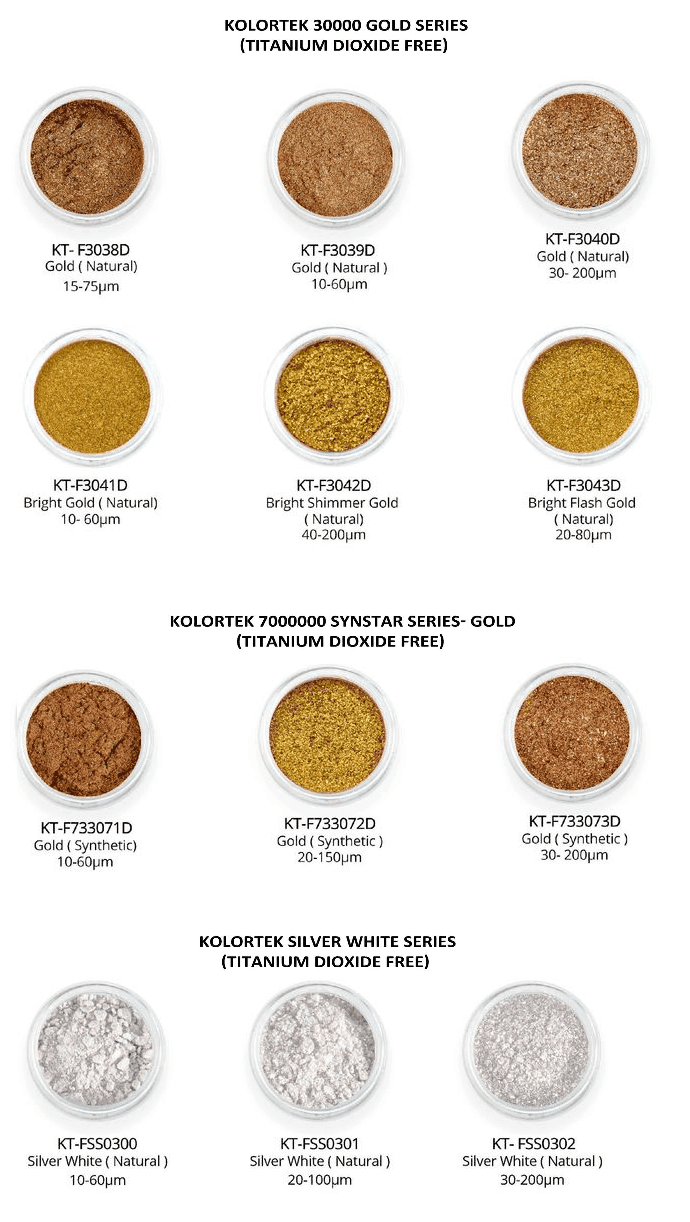
All cosmetic-grade products we supply are supported by standard compliance documentation. Certifications include ISO, REACH, SGS, TÜV SÜD, and Kosher. Formulation guidelines and technical support are available to assist R&D teams working through TiO₂-free reformulation projects.
"Our technical team is actively working with customers on TiO₂-free reformulation briefs across foundation, powder, and eye-area categories. The substitution strategy is product-specific — there is no single drop-in replacement — but our range covers most of the functional and aesthetic roles TiO₂ has traditionally played."
SpecialChem — Titanium Dioxide-Free Alternatives for Cosmetics, published 2026-03-28.
Available at: https://cosmetics.specialchem.com/tech-library/article/titanium-dioxide-free-alternatives-for-cosmetics
For product data, samples, or technical consultation on TiO₂-free formulation options, contact us at contact@kolortek.com.

 English
 Français
 Deutsch
 Русский
 Español
 Português